What it means
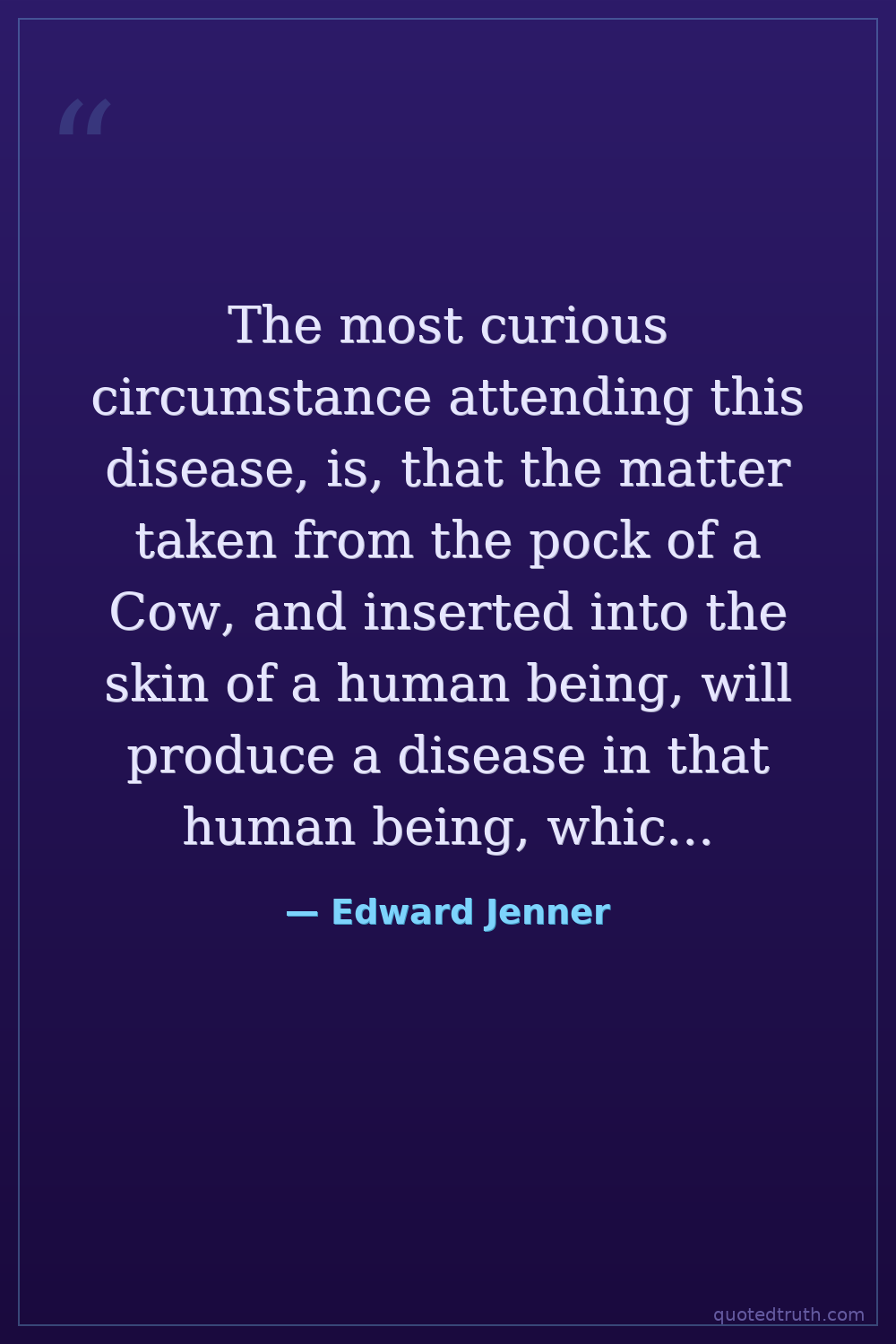
Introducing material from a cowpox lesion into a human creates a mild disease that permanently shields that person from catching smallpox. The body, once exposed to this weaker infection, gains lasting protection against the deadlier one — a deliberate, transferable immunity achievable through a simple medical procedure rather than surviving the actual deadly disease.
Relevance to Edward Jenner
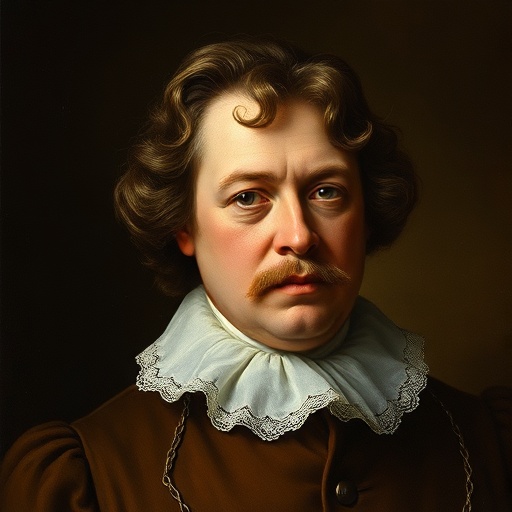
Jenner, an English country physician, spent decades observing that milkmaids who caught cowpox rarely contracted smallpox. His 1796 experiment on James Phipps — deliberately inoculating a boy with cowpox then exposing him to smallpox — proved this hypothesis. This quote captures his careful, evidence-first reasoning and his revolutionary leap from folk observation to verified medical procedure.
The era
In the late 18th century, smallpox killed roughly 400,000 Europeans annually and disfigured survivors. Variolation — deliberate exposure to live smallpox — existed but carried real mortality risk. Jenner's 1798 paper offered a safer alternative, arriving as Enlightenment empiricism was transforming medicine from tradition-based practice into systematic observation and experiment, making his controlled, documented approach both novel and credible.
AI-generated insights based on extensive research and information for context. Factual errors? Email [email protected].