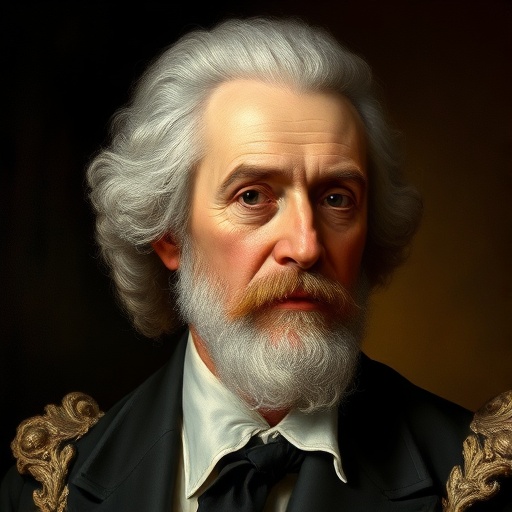
Antoine Lavoisier — "The most important thing for a man of science is to have a clear head and a good…"
The most important thing for a man of science is to have a clear head and a good heart.
The most important thing for a man of science is to have a clear head and a good heart.
Click any product to generate a realistic preview. Up to 3 at a time.
* Initial load can take up to 90 seconds — revising the preview in another color is nearly instant.
"I have been so lucky in life, that I have had nothing to do but to collect the fruits of the labours of others."
"Chemistry is a science of facts and experiments, and not of opinions."
"It is not sufficient to know, one must apply."
"The chemist, like the artist, must have a vivid imagination, but it must be controlled by reason."
"The art of drawing conclusions from experiments and observations consists in evaluating probabilities and in judging if they are great enough to constitute proofs."
Found in 1 providers: grok
1 source checked
Science demands more than technical skill—it requires intellectual clarity to reason without bias or confusion, and moral integrity to pursue truth honestly. A clear head means stripping away assumption to see evidence plainly; a good heart means caring about knowledge for humanity's benefit, not personal glory. Together they guard against sloppy reasoning and corrupt motives—the two forces that most reliably destroy scientific progress.
Lavoisier revolutionized chemistry by bringing radical clarity to a field cluttered with alchemical mysticism. His systematic identification of oxygen and hydrogen, demolition of phlogiston theory, and creation of standardized chemical nomenclature all required disciplined, precise thinking. His good heart showed in funding public works and scientific education from his personal fortune. Tragically, that same fortune—earned as a tax farmer—led to his guillotining during the Reign of Terror in 1794.
Lavoisier worked during the Enlightenment, when European intellectuals believed reason and empirical method could replace superstition and inherited dogma. Chemistry was just shedding its alchemical past; careful thinkers like Lavoisier were establishing it as a rigorous discipline. Yet the same revolutionary era that celebrated reason also executed him—the Reign of Terror cared nothing for clear heads or good hearts. His death in 1794 exposed the brutal gap between Enlightenment ideals and revolutionary politics.
AI-generated insights based on extensive research and information for context. Factual errors? Email [email protected].
Your cart is empty