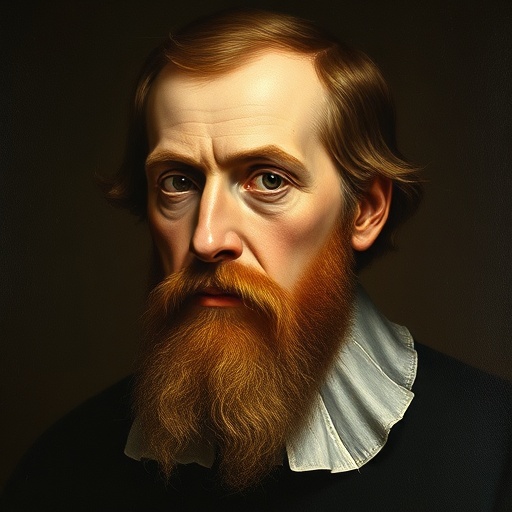
John Calvin — "The most perfect way of worshiping God is to live a holy life."
The most perfect way of worshiping God is to live a holy life.
The most perfect way of worshiping God is to live a holy life.
Click any product to generate a realistic preview. Up to 3 at a time.
* Initial load can take up to 90 seconds — revising the preview in another color is nearly instant.
"When God chooses a man, he does not consider what he is, but what he will make him."
"Ignorance of predestination is a great evil, because it deprives us of the knowledge of God's glory."
"The reprobate are raised up to manifest the glory of God, when, by their condemnation, they show his justice."
"The reprobate are not only destitute of the Spirit, but are also given up to a reprobate mind."
"It is not on the basis of human works, whether performed or foreseen, that God decrees to elect some based on unmerited grace and pass by (preterition) others based on proximate sinful works."
French theologian whose Institutes of the Christian Religion (1536) systematized Protestant Reformed doctrine, including predestination. Closely associated with Martin Luther (Reformation founder, Calvin's predecessor). For an intellectual contrast, see Jacobus Arminius, Dutch Reformed theologian (1560-1609) — Arminius's rejection of strict double-predestination founded Arminianism — the theological tradition modern Methodism, most evangelicalism, and Pentecostalism descend from. The Calvinist-Arminian debate has divided Protestantism for 400 years.
Found in 1 providers: grok
1 source checked
True worship isn't confined to church rituals or formal prayer — it extends across every moment of daily life. This argues that moral conduct, ethical choices, and righteous behavior constitute the highest form of devotion to God. Genuine faith shows itself in how one lives, not just how one prays. The sacred and the mundane are inseparable; holiness of life is worship in its fullest expression.
Calvin spent decades transforming Geneva into a model Christian commonwealth, establishing consistories — church courts — to enforce moral discipline in citizens' daily lives. His Institutes of the Christian Religion rooted true faith in sanctification, not ceremony. Believing God's glory was displayed through believers' conduct, Calvin saw ethical behavior as both evidence of election and an act of worship, making this quote central to his entire theological and civic project.
The Protestant Reformation directly challenged Catholicism's sacramental system, where worship was mediated through priests, Mass, and ritual. Calvin's generation argued the Church had buried true religion under ceremony. In Geneva, reformers aimed to reconstruct entire societies around Scripture. This quote reflects that radical reshaping: worship moved from the altar into the marketplace, the home, and civic life, making holiness a public and political — not merely private — matter.
AI-generated insights based on extensive research and information for context. Factual errors? Email [email protected].
Your cart is empty