What it means
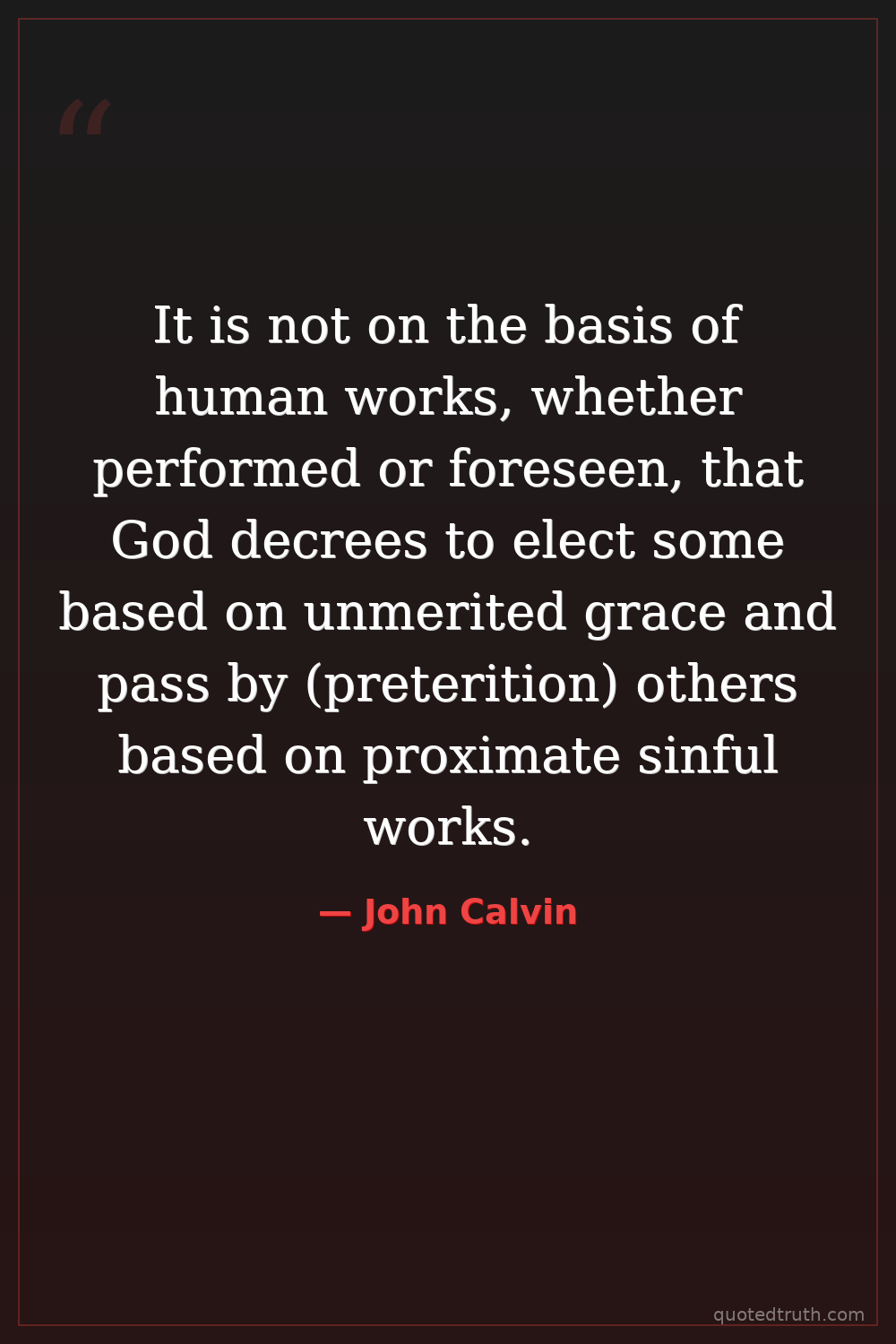
God's choice of who is saved rests entirely on his own unmerited grace, not on anything a person does or will do — not even deeds God foresees in advance. Those chosen for salvation receive it as a pure gift. Those passed over (preterition) are not condemned arbitrarily, but their own sinfulness serves as the immediate cause. Human merit plays zero role in election; grace alone explains why anyone is saved.
Relevance to John Calvin
Calvin built his entire theological system around God's absolute sovereignty. His Institutes of the Christian Religion (1536–1559) made predestination central to Reformed faith. As a lawyer-turned-reformer governing Geneva's church, Calvin insisted salvation cannot depend on human effort — that would make God's choice contingent on creatures. This doctrine explained why some believe and others don't without making God unjust: unmerited grace explains the elect; their own sinful nature explains the reprobate.
The era
The 16th-century Reformation erupted partly over Rome's sale of indulgences — the notion that human acts could purchase divine favor. Calvin wrote amid fierce debate about merit, grace, and salvation. The Council of Trent (1545–1563) simultaneously codified Catholic teaching that human cooperation with grace matters. Calvin's hard predestinarianism directly countered this: in an age when peasants literally bought salvation certificates, he declared human works count for nothing before God's sovereign decree.
AI-generated insights based on extensive research and information for context. Factual errors? Email [email protected].