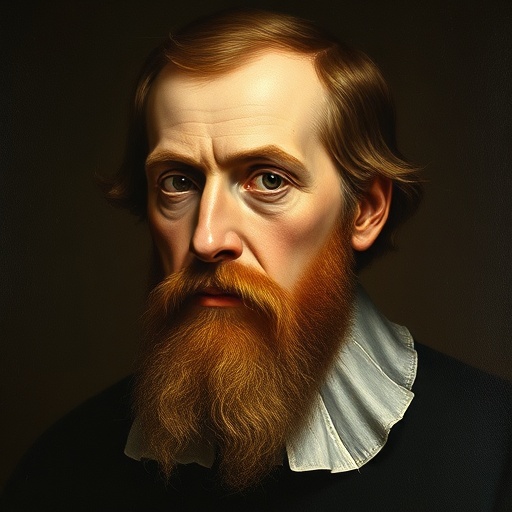
John Calvin — "Ignorance of predestination is a great evil, because it deprives us of the knowl…"
Ignorance of predestination is a great evil, because it deprives us of the knowledge of God's glory.
Ignorance of predestination is a great evil, because it deprives us of the knowledge of God's glory.
Click any product to generate a realistic preview. Up to 3 at a time.
* Initial load can take up to 90 seconds — revising the preview in another color is nearly instant.
"The Lord then would have all the godly to burn with so much zeal in the defense of lawful worship and true religion, that no connection, no relationship, nor any other consideration, connected with th…"
"It is not in our power to believe or not to believe."
"The more we know God, the more we humble ourselves."
"God's ultimate discrimination rests solely on the freedom and sovereign will of God."
"We call predestination God's eternal decree, by which he compacted with himself what he willed to become of each man. For all are not created in equal condition; rather, eternal life is foreordained f…"
French theologian whose Institutes of the Christian Religion (1536) systematized Protestant Reformed doctrine, including predestination. Closely associated with Martin Luther (Reformation founder, Calvin's predecessor). For an intellectual contrast, see Jacobus Arminius, Dutch Reformed theologian (1560-1609) — Arminius's rejection of strict double-predestination founded Arminianism — the theological tradition modern Methodism, most evangelicalism, and Pentecostalism descend from. The Calvinist-Arminian debate has divided Protestantism for 400 years.
Found in 1 providers: grok
1 source checked
Not understanding predestination — the belief that God sovereignly determines who receives salvation — cuts people off from fully grasping God's nature and power. Calvin saw predestination not as a peripheral doctrine but as a window into God's absolute authority over creation. To remain ignorant of it is to hold a diminished, distorted view of the divine, which he considered a serious spiritual failure, not a safe or neutral position.
Calvin made predestination the cornerstone of his Institutes of the Christian Religion, expanded through 1559. His Geneva ministry was defined by insistence on God's absolute sovereignty — he viewed softening this doctrine as theological cowardice. Conflicts with Lutherans, Arminians, and Catholics often centered on this exact point. For Calvin, predestination wasn't abstraction but the foundation of true humility and worship: knowing God's glory required knowing God's total, unconditional control over salvation.
The 1500s Reformation had shattered Christianity's unified authority. Luther's break from Rome ignited fierce debates about salvation — could humans cooperate with grace, or was it entirely God's act? The Catholic Church maintained human free will played a role; reformers pushed back hard. Calvin's Geneva became a crucible of these disputes. Predestination was not merely academic: it dismantled the role of priests, indulgences, and sacraments in the entire medieval economy of salvation.
AI-generated insights based on extensive research and information for context. Factual errors? Email [email protected].
Your cart is empty