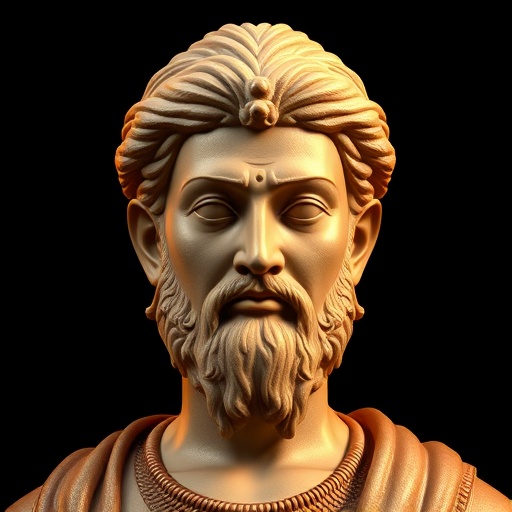
Mahavira — "Conquer your passions and you will conquer the world."
Conquer your passions and you will conquer the world.
Conquer your passions and you will conquer the world.
Click any product to generate a realistic preview. Up to 3 at a time.
* Initial load can take up to 90 seconds — revising the preview in another color is nearly instant.
"All things are impermanent, and the soul is eternal."
"The soul is the only thing that is eternal; everything else is temporary."
"The greatest mistake of a soul is non-restraint."
"A wise man should abstain from killing any living being."
"One who has conquered himself is truly a hero."
24th and last Tirthankara of Jainism, whose teachings of strict ahimsa (non-violence), aparigraha (non-attachment), and karma reshaped ancient Indian religion. Closely associated with The Buddha (near-contemporary moral revolutionary, also reacting against Vedic ritualism). For an intellectual contrast, see Vedic Brahmanical ritual sacrifice, the animal-sacrifice-centered Vedic religion of his era — Mahavira's ahimsa demanded total non-violence, including not eating root vegetables that kill the plant — a maximum-distance ethical move from the Vedic priestly tradition that ritually sacrificed cattle and horses. The two cleanest poles of ancient Indian religious ethics.
Found in 1 providers: grok
1 source checked
Mastering your internal impulses—anger, greed, pride, and desire—gives you a power greater than any external conquest. When you stop being driven by raw emotion and craving, you become free from suffering and dependent on nothing outside yourself. True power isn't domination over others but sovereignty over your own mind, leaving you clear, deliberate, and unshakable in any circumstance.
Mahavira abandoned his wealthy noble life at 30 to pursue extreme asceticism, renouncing possessions, family, and comfort for twelve years. His entire spiritual path centered on conquering the four passions—anger, pride, deceit, and greed—called kashaya in Jain thought. He achieved kevala jnana (omniscience) precisely through this internal conquest, making this quote the literal biography of his enlightenment.
Mahavira lived in 6th-century BCE India during the same axial age as the Buddha, amid a warrior-caste culture that glorified battlefield conquest and royal power. Kingdoms rose through military dominance. His radical inversion—that inner discipline outranked armies—directly challenged Kshatriya values he himself was born into, offering a counter-philosophy when Vedic ritualism and violent statecraft dominated moral life.
AI-generated insights based on extensive research and information for context. Factual errors? Email [email protected].
Your cart is empty