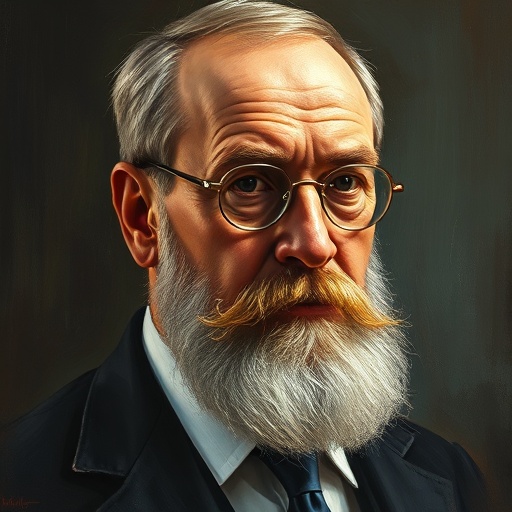
Robert Koch — "The prevention of disease is far more important than its cure."
The prevention of disease is far more important than its cure.
The prevention of disease is far more important than its cure.
Click any product to generate a realistic preview. Up to 3 at a time.
* Initial load can take up to 90 seconds — revising the preview in another color is nearly instant.
"The microbes are always there; it is the soil that changes."
"The existence of microorganisms as a cause of disease is no longer a matter of theory, but a demonstrated fact."
"The microscope is the most important instrument in bacteriology."
"If my work has any value, it lies in the method, not in the result."
"It is a great privilege to be able to contribute to the advancement of science."
Found in 1 providers: grok
1 source checked
Stopping illness before it starts is more valuable than treating it after it develops. Prevention saves more lives, costs less, and avoids suffering entirely. Identifying disease causes — bacteria, viruses, environmental triggers — enables targeted public health measures like vaccines, sanitation, and quarantine that protect entire populations rather than treating individuals one patient at a time. Cure reaches one sick person; prevention can shield millions who never get sick.
Koch spent his career identifying exact bacterial causes of tuberculosis, cholera, and anthrax. His postulates gave medicine its first systematic method for proving what specific pathogen caused each disease. That knowledge was never purely academic — once you know the microbe, you can interrupt transmission through sanitation and vaccination. Koch's discovery that contaminated water spread cholera directly drove the sanitation reforms that saved millions, making prevention the logical payoff of his science.
Koch worked during Europe's peak epidemic era — tuberculosis killed one in seven people and cholera repeatedly devastated cities, while medicine still blamed bad air. Rapid industrialization packed workers into disease-ridden tenements. His bacterial discoveries arrived alongside new possibilities: municipal water treatment, sewage systems, and vaccination campaigns. Public health was becoming a government responsibility, transforming prevention from a physician's aspiration into a political and civic imperative reshaping modern states.
AI-generated insights based on extensive research and information for context. Factual errors? Email [email protected].
Your cart is empty