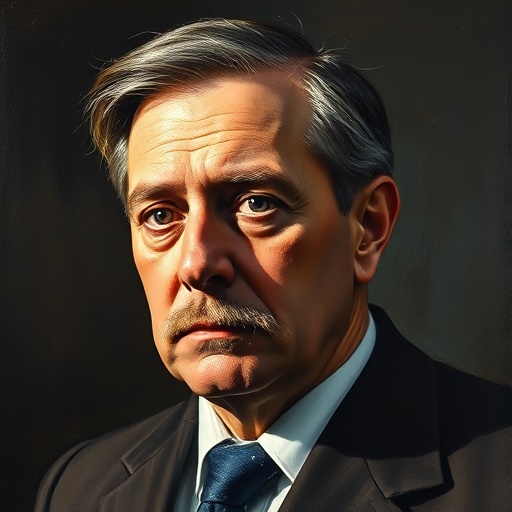
John von Neumann — "The problems of mathematics are not in mathematics itself, but in the human mind…"
The problems of mathematics are not in mathematics itself, but in the human mind.
The problems of mathematics are not in mathematics itself, but in the human mind.
Click any product to generate a realistic preview. Up to 3 at a time.
* Initial load can take up to 90 seconds — revising the preview in another color is nearly instant.
"It is not a question of whether we will be able to build a computer that can think. It is a question of whether we will be able to build a computer that can think as fast as we do."
"All stable processes we shall predict. All unstable processes we shall control."
"The computer is a universal machine. It can do anything that can be described algorithmically."
"The system 'logic' is not absolute, it is relative to the observer."
"Young man, in mathematics you don't understand things. You just get used to them."
Found in 1 providers: grok
1 source checked
Mathematics as a formal system is internally consistent — difficulties arise from human cognitive limitations: how we frame problems, what we choose to formalize, and what our minds can grasp. Mathematical obstacles aren't inherent flaws in logical structure but products of human intuition and the limits of what we can mentally model. The discipline advances when minds expand their capacity to comprehend abstract structures.
Von Neumann bridged pure abstraction and real-world application as few ever have — formalizing quantum mechanics, founding game theory, designing computer architecture. Possessing near-photographic memory and exceptional computational ability, he understood firsthand that cognitive capacity, not mathematical truth, was the binding constraint on progress. His career was defined by translating abstract structures into forms human minds could operationalize, reflecting a conviction that cognition shapes what mathematics can accomplish.
Von Neumann's working life spanned a period of radical mathematical upheaval. Gödel's incompleteness theorems had destabilized foundational certainty, while wartime urgency — the Manhattan Project, early computing — demanded mathematics solve problems at unprecedented scale. The birth of digital computers raised new questions about the boundary between human and machine cognition. These pressures forced mathematicians to reckon with how deeply human minds constrain what formal systems can practically achieve.
AI-generated insights based on extensive research and information for context. Factual errors? Email [email protected].
Your cart is empty