What it means
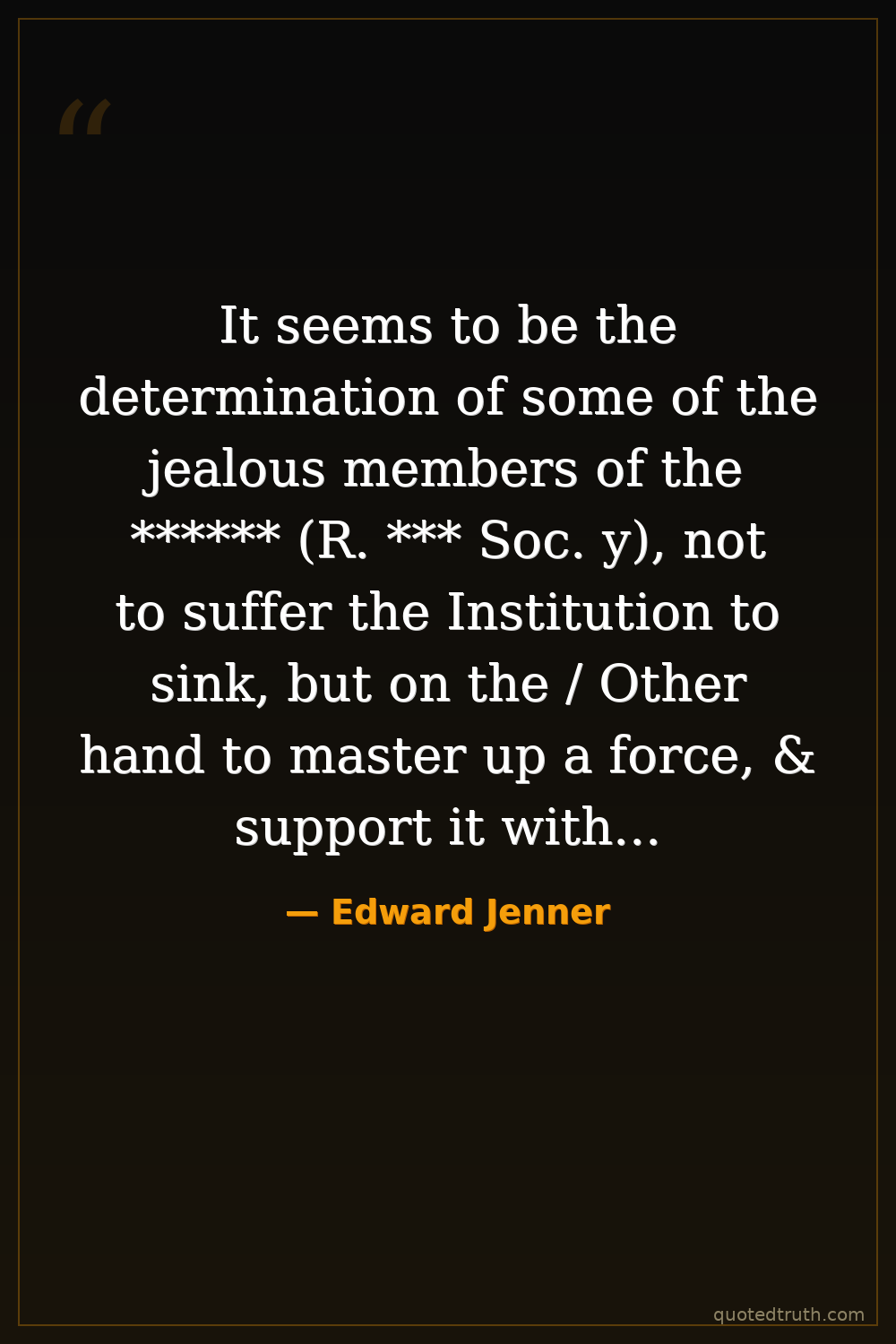
Jenner acknowledges internal jealousy and rivalry within a smallpox-focused institution but refuses to let politics override mission. He declares he would support any well-organized body dedicated to defeating smallpox. It would be almost unnatural—against his very character—for the man who invented vaccination to withhold support from institutions sharing that same fundamental goal, whatever factional disputes existed among their members.
Relevance to Edward Jenner
Jenner spent decades fighting for vaccine acceptance against hostile critics and petty rivalries in the medical establishment. He established the Royal Jennerian Society in 1803 to promote vaccination, then watched it fracture from internal politics. His insistence that mission trumps rivalry reflects his pragmatic character—he tolerated professional jealousy patiently because eradicating smallpox, which had killed his own patients, always mattered more than personal pride.
The era
In early 19th-century Britain, smallpox killed roughly 10% of the population and caused widespread blindness. Jenner's 1796 vaccine discovery sparked a public health revolution, but also fierce institutional competition between rival vaccination societies. The Royal Jennerian Society, founded 1803, fought internal power struggles even as the disease ravaged cities. Parliament had granted Jenner £30,000 for his discovery, yet political infighting constantly threatened to derail the vaccination movement's momentum.
AI-generated insights based on extensive research and information for context. Factual errors? Email [email protected].