What it means
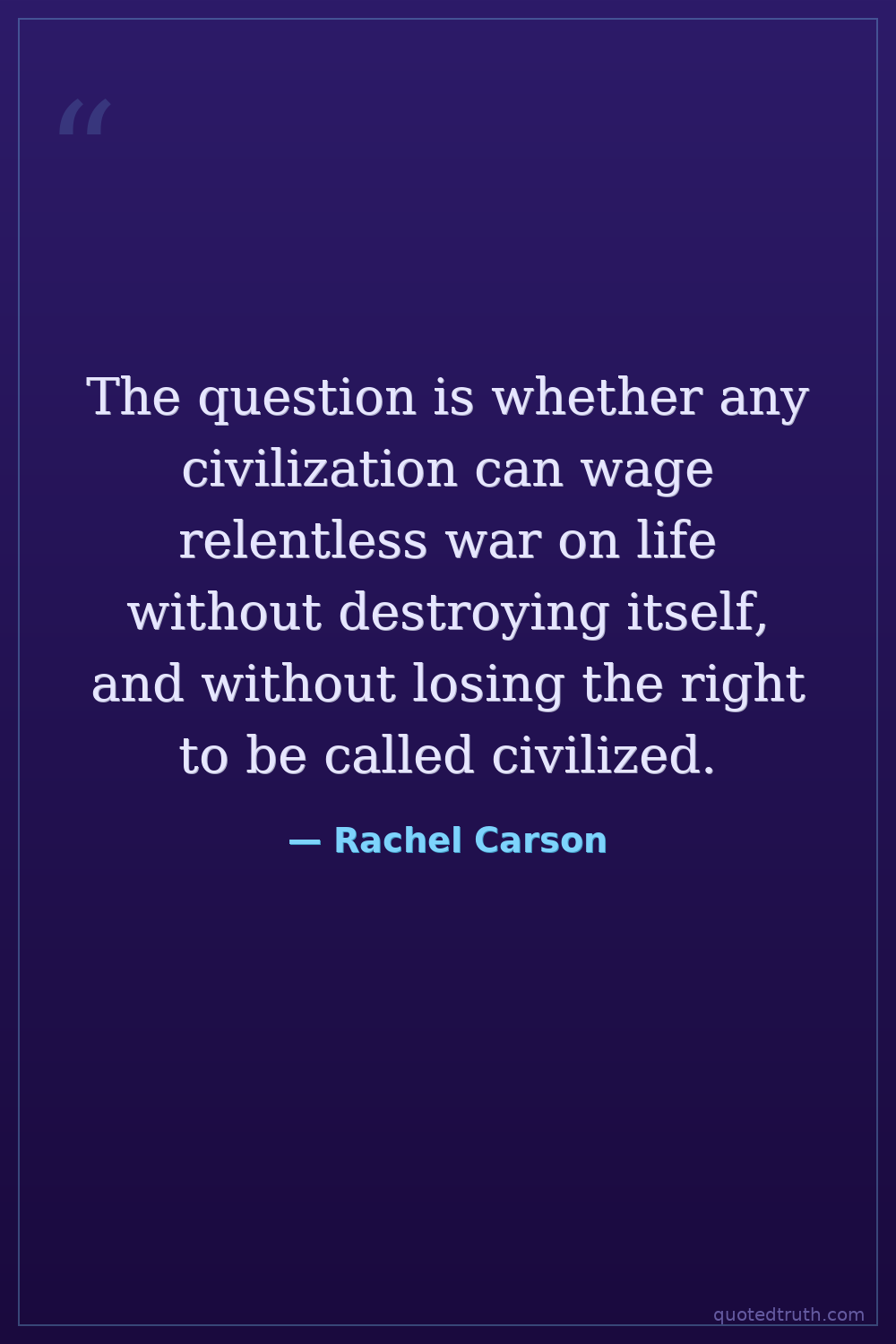
A society that systematically destroys living things — through pesticides, pollution, and habitat destruction — undermines both its survival and its moral standing. Carson poses it as an existential question: you cannot wage war on nature without consequences for human health and culture. Civilization earns its name by how it treats life, not just by technological progress. Ecological destruction is ultimately self-destruction.
Relevance to Rachel Carson
Carson was a marine biologist and science writer whose 1962 book Silent Spring documented how DDT and other pesticides were decimating bird populations and contaminating food chains. She endured fierce attacks from the chemical industry but persisted. Her conviction — that humanity is embedded in nature, not above it — runs through all her work. She believed scientific power without ecological ethics made civilization morally bankrupt.
The era
Silent Spring was published in 1962, when the postwar boom had made pesticide use ubiquitous. DDT was sprayed on crops, marshes, and suburbs with little restriction. The Cold War framed progress as industrial dominance over nature. Carson's book sparked the modern environmental movement, leading directly to the 1972 DDT ban and the 1970 creation of the EPA. Her question about civilization's right to the name struck a culture just beginning to reckon with its own toxicity.
AI-generated insights based on extensive research and information for context. Factual errors? Email [email protected].