What it means
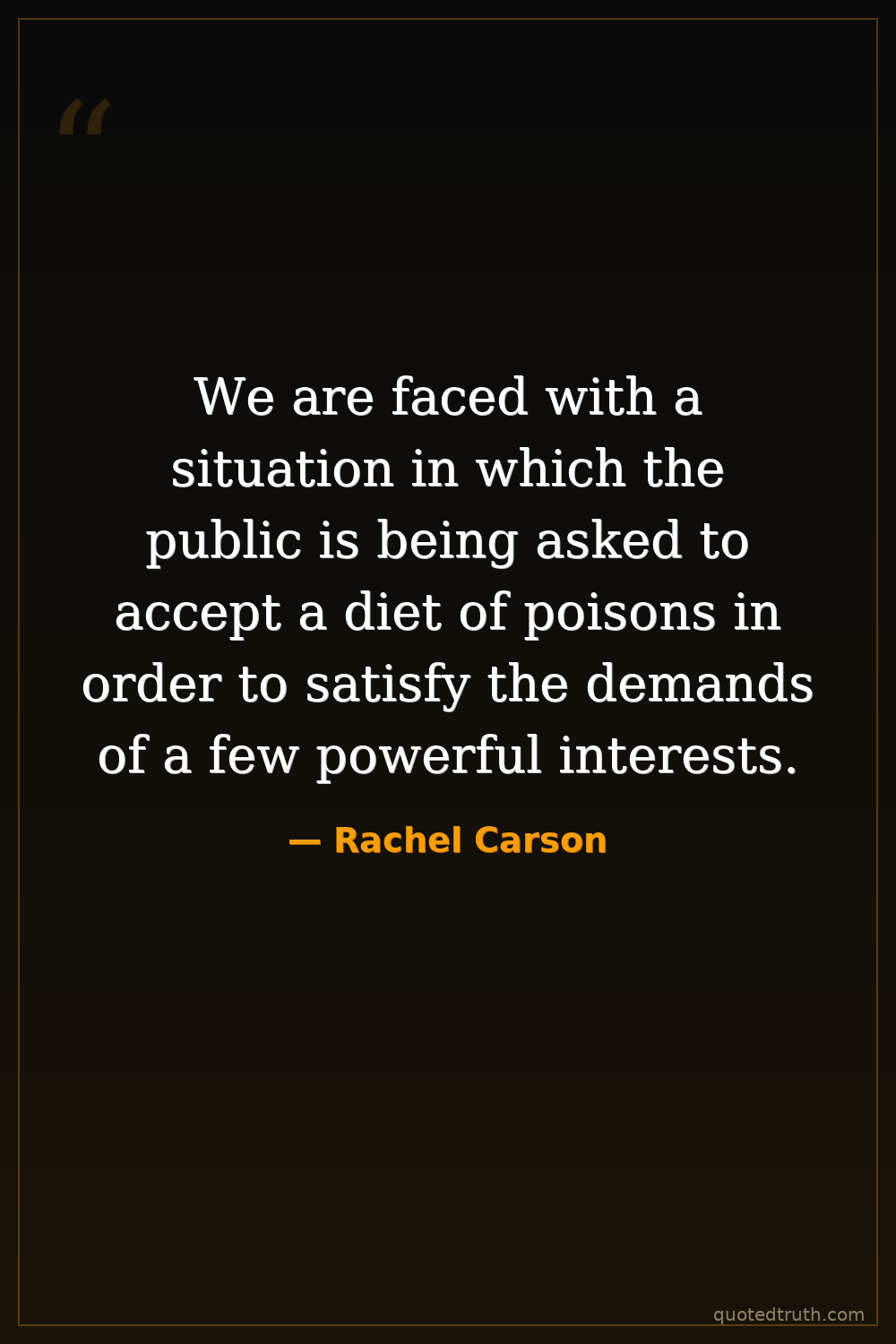
Ordinary people are being systematically exposed to harmful chemicals — pesticides and industrial toxins — without meaningful consent, for the benefit of corporations rather than communities. This isn't a public health necessity; it's an economic arrangement where a small group of powerful industries shapes policy so the many absorb health risks while the few capture the profits. Environmental contamination is reframed here as political and economic injustice, not merely a scientific problem.
Relevance to Rachel Carson
Carson worked as a marine biologist with the U.S. Fish and Wildlife Service before Silent Spring made her famous. That 1962 book documented how DDT bioaccumulated through entire ecosystems. The chemical industry — Monsanto, Velsicol — launched a coordinated campaign to discredit her as an alarmist. This quote distills her central conviction: industry had captured the regulatory process. Her willingness to name 'powerful interests' directly reflected the personal and professional attacks she knew would follow.
The era
Silent Spring appeared in 1962 during America's postwar chemical boom. DDT had been celebrated since World War II as a near-miracle pesticide, and agricultural chemical companies wielded massive lobbying power. The FDA and USDA largely deferred to industry claims. The EPA didn't yet exist — it was founded in 1970. Carson's congressional testimony helped shift public opinion, ultimately contributing to DDT's U.S. ban in 1972 and the birth of the modern environmental movement.
AI-generated insights based on extensive research and information for context. Factual errors? Email [email protected].