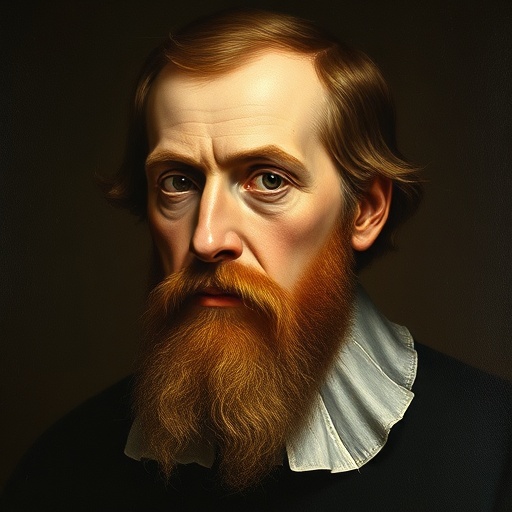
John Calvin — "The reprobate are blinded that they may not see, and hardened that they may not …"
The reprobate are blinded that they may not see, and hardened that they may not feel.
The reprobate are blinded that they may not see, and hardened that they may not feel.
Click any product to generate a realistic preview. Up to 3 at a time.
* Initial load can take up to 90 seconds — revising the preview in another color is nearly instant.
"The human heart is an idol factory."
"The best way to overcome evil is to do good."
"We are not our own: let not our reason nor our will, therefore, sway our plans and deeds. We are not our own: let us therefore not set it as our goal to seek what is expedient for us according to the …"
"He who has God for his father has the church for his mother."
"Whoever shall now contend that it is unjust to put heretics and blasphemers to death will knowingly and willingly incur their very guilt."
French theologian whose Institutes of the Christian Religion (1536) systematized Protestant Reformed doctrine, including predestination. Closely associated with Martin Luther (Reformation founder, Calvin's predecessor). For an intellectual contrast, see Jacobus Arminius, Dutch Reformed theologian (1560-1609) — Arminius's rejection of strict double-predestination founded Arminianism — the theological tradition modern Methodism, most evangelicalism, and Pentecostalism descend from. The Calvinist-Arminian debate has divided Protestantism for 400 years.
Found in 1 providers: grok
1 source checked
Those condemned to damnation — the reprobate — are actively prevented by God from perceiving spiritual truth or feeling remorse or conviction. It's not that they simply choose wrong; God blinds their minds and hardens their hearts, ensuring they cannot respond to the gospel. Damnation isn't merely permitted — it's secured by divine action on human faculties. Salvation and condemnation are both entirely God's doing, not human choice.
Calvin's entire theological system centered on God's absolute sovereignty. His Institutes of the Christian Religion systematized double predestination: God elects some to salvation and actively passes over others. As Geneva's dominant minister and lawgiver, Calvin enforced rigorous doctrine, even executing dissenters like Servetus. This quote reflects his refusal to soften predestination's harshest logic — God's will governs not just who is saved, but who is constitutionally incapable of ever being saved.
The 16th-century Reformation had exploded debates about grace, free will, and salvation. Luther had already clashed with Erasmus over free will in 1525. Calvin, writing from Geneva through the 1540s–1550s, pushed further against Catholic reliance on human merit. Wars of religion ravaged Europe, and theological certainty felt existentially urgent. The question of who was truly elect — and who was irredeemably lost — carried life-and-death stakes in a continent fracturing violently along confessional lines.
AI-generated insights based on extensive research and information for context. Factual errors? Email [email protected].
Your cart is empty