Laozi — "The sage is like water, which flows to the lowest places and yet is the stronges…"
The sage is like water, which flows to the lowest places and yet is the strongest.
The sage is like water, which flows to the lowest places and yet is the strongest.
Click any product to generate a realistic preview. Up to 3 at a time.
* Initial load can take up to 90 seconds — revising the preview in another color is nearly instant.
"He (the sage) wants all things to follow their own nature, but dares not act."
"Knowing others is intelligence; knowing yourself is true wisdom. Mastering others is strength; mastering yourself is true power."
"Great acts are made up of small deeds."
"Pursue without interfering."
"If you would take, you must first give, this is the beginning of intelligence."
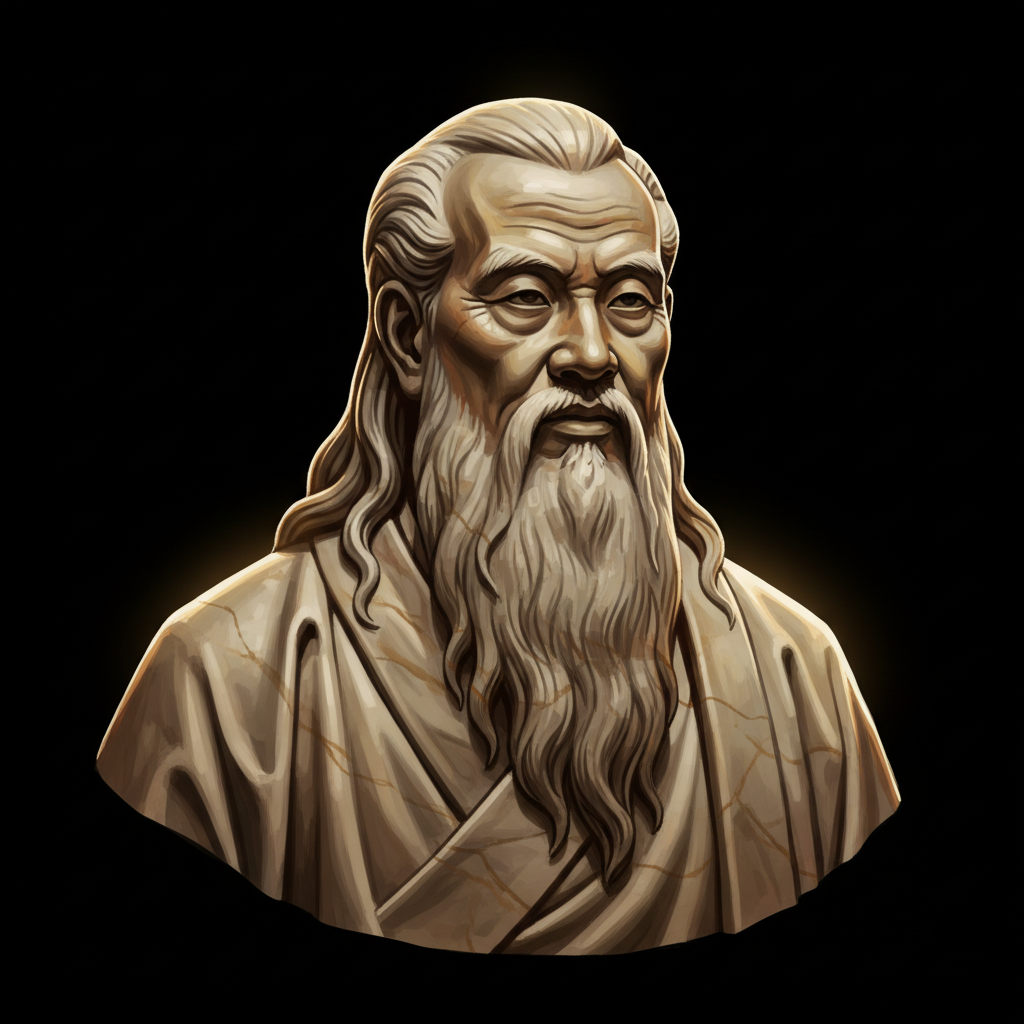
Reputed founder of Taoism and author of the Tao Te Ching, whose wu wei (effortless action) shaped East Asian philosophy. Closely associated with Zhuangzi (later Taoist who extended Laozi's framework). For an intellectual contrast, see Confucius, near-contemporary Chinese sage of social ritual and duty — Confucius systematized social order through ritual and hierarchy; Laozi argued that all such systems were the disease, not the cure — the two founding poles of Chinese moral philosophy.
Found in 1 providers: grok
1 source checked
True strength comes from humility and flexibility, not force or dominance. Water seeks the lowest ground, never competing for height or prestige, yet it shapes stone, carves valleys, and cannot be destroyed. A wise person works the same way: yielding where others push, serving where others command, adapting where others resist. This quiet adaptability outlasts brute power every time, because softness that persists becomes unstoppable while rigidity eventually breaks.
Laozi built Taoism around wu wei, effortless action aligned with nature's flow, and water is his signature metaphor throughout the Tao Te Ching. Said to have served as a royal archivist in the Zhou court before withdrawing from political life, he valued retreat over striving and observation over command. Legend holds he left society riding west on an ox, embodying the very lowness and yielding this saying praises, rejecting status and ambition entirely.
Laozi lived during the late Zhou dynasty around the 6th century BCE, as centralized authority collapsed into the warring feudal states that would define the Spring and Autumn period. Rulers demanded rigid Confucian hierarchy, loyalty, and aggressive statecraft to survive. Against that backdrop of militarism and ceremonial rigidity, teaching that softness conquers hardness and humility outlasts ambition was radical, offering an alternative path rooted in nature rather than court protocol or battlefield dominance.
AI-generated insights based on extensive research and information for context. Factual errors? Email [email protected].
Your cart is empty