Laozi — "If you would take, you must first give, this is the beginning of intelligence."
If you would take, you must first give, this is the beginning of intelligence.
If you would take, you must first give, this is the beginning of intelligence.
Click any product to generate a realistic preview. Up to 3 at a time.
* Initial load can take up to 90 seconds — revising the preview in another color is nearly instant.
"Governing a large country is like cooking a small fish. Too much handling will spoil it."
"The sage does not hoard. The more he helps others, the more he benefits himself."
"Use justice to rule a country. Use surprise to wage war. Use non-action to govern the world."
"Simplicity has no name is free of desires. Being free of desires it is tranquil. And the world will be at peace of it's own accord."
"Do not exalt the talented, so that people will not be contentious. Do not value rare treasures, so that people will not steal. Do not display what is desirable, so that people will not be confused."
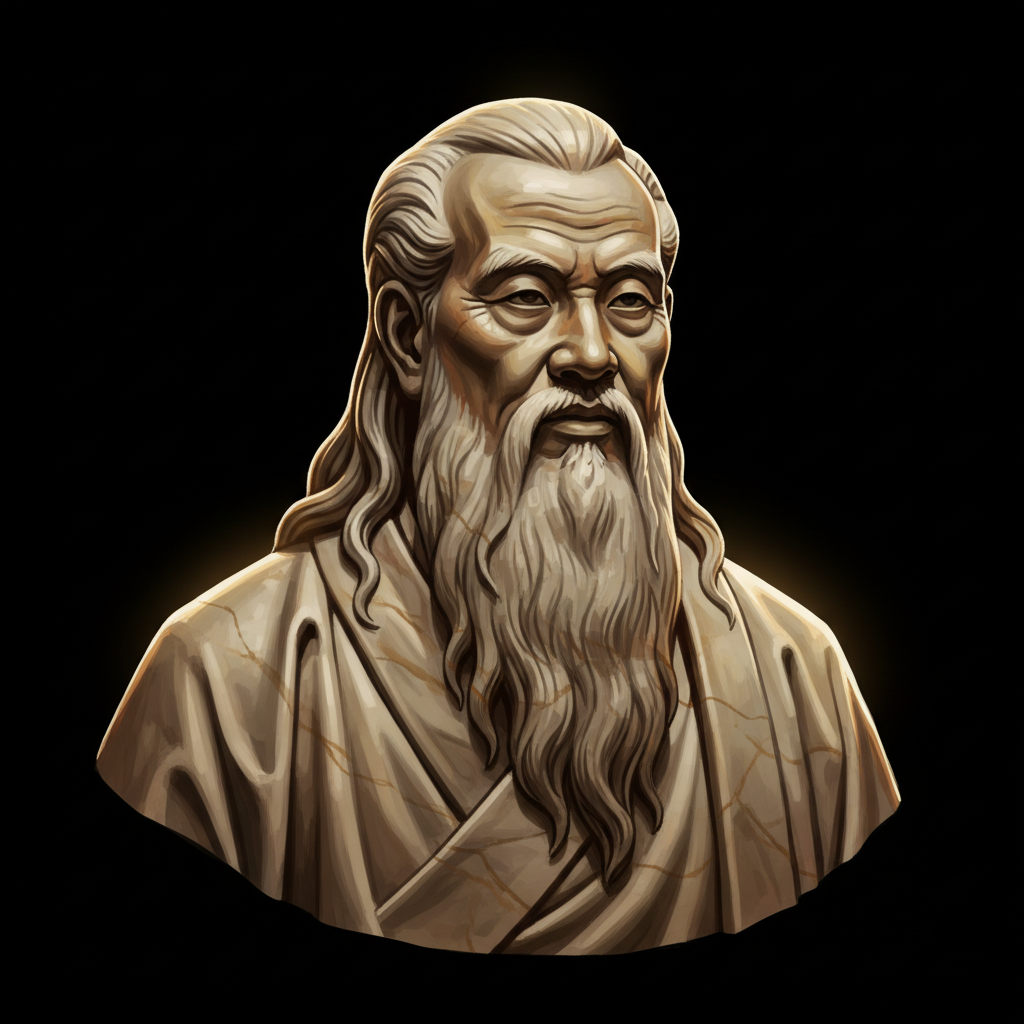
Reputed founder of Taoism and author of the Tao Te Ching, whose wu wei (effortless action) shaped East Asian philosophy. Closely associated with Zhuangzi (later Taoist who extended Laozi's framework). For an intellectual contrast, see Confucius, near-contemporary Chinese sage of social ritual and duty — Confucius systematized social order through ritual and hierarchy; Laozi argued that all such systems were the disease, not the cure — the two founding poles of Chinese moral philosophy.
Found in 1 providers: grok
1 source checked
Getting what you want starts with offering something first. Before you can receive trust, loyalty, cooperation, or influence, you have to put those things out into the world yourself. The principle reframes taking not as seizing but as the natural return on what you've already contributed. Recognizing this reciprocal pattern is the foundation of wisdom, because it aligns your actions with how human relationships and nature actually work rather than fighting against them.
Laozi served as an archivist in the Zhou royal court, a role steeped in observing how power, ritual, and human affairs flowed. His Tao Te Ching repeatedly teaches wu wei and reversal, the idea that soft overcomes hard and yielding precedes gaining. This saying distills that core Taoist belief: acting in harmony with the cycle of give-and-take rather than grasping. It reflects a thinker who chose quiet withdrawal over ambition, trusting that restraint and generosity produce lasting returns.
Laozi lived during the late Zhou dynasty, around the 6th century BCE, as centralized authority crumbled into the Warring States era. Feudal lords grabbed land, armies clashed, and Confucian scholars pushed rigid hierarchy and duty as remedies. Against this backdrop of aggressive taking, Laozi's counsel to give first was radical. It offered rulers and ordinary people an alternative to force, suggesting that stability and prosperity came from generosity and restraint, not conquest. The saying pushed back against an age defined by seizure.
AI-generated insights based on extensive research and information for context. Factual errors? Email [email protected].
Your cart is empty