Laozi — "Knowing others is intelligence; knowing yourself is true wisdom. Mastering other…"
Knowing others is intelligence; knowing yourself is true wisdom. Mastering others is strength; mastering yourself is true power.
Knowing others is intelligence; knowing yourself is true wisdom. Mastering others is strength; mastering yourself is true power.
Click any product to generate a realistic preview. Up to 3 at a time.
* Initial load can take up to 90 seconds — revising the preview in another color is nearly instant.
"When the great way falls into disuse, there are benevolence and rectitude."
"Seal the openings, shut the doors, and until your last day you will not be exhausted. Widen the openings, interfere, and until your last day you will not be safe."
"Doing nothing is better than being busy doing nothing."
"Life is a series of natural and spontaneous changes. Don't resist them; that only creates sorrow. Let reality be reality. Let things flow naturally forward in whatever way they like."
"If you would take, you must first give, this is the beginning of intelligence."
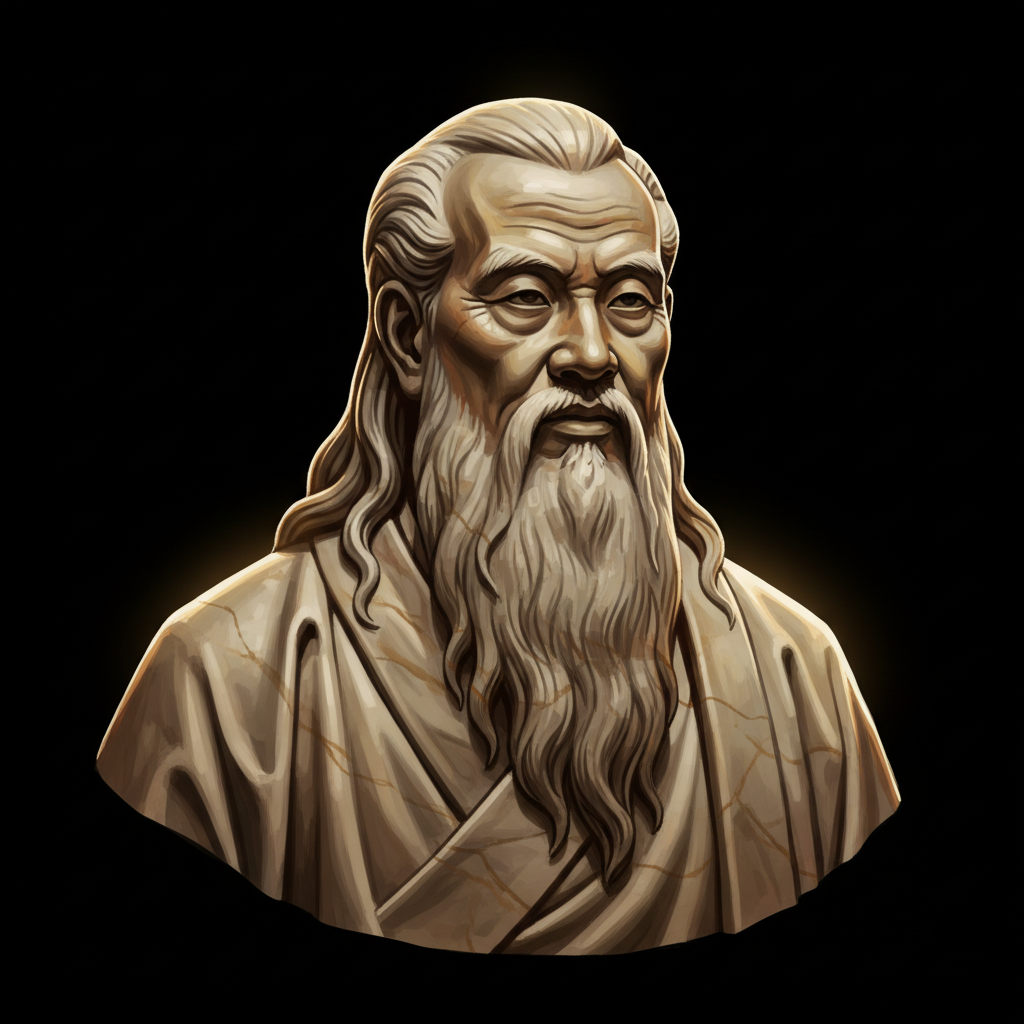
Reputed founder of Taoism and author of the Tao Te Ching, whose wu wei (effortless action) shaped East Asian philosophy. Closely associated with Zhuangzi (later Taoist who extended Laozi's framework). For an intellectual contrast, see Confucius, near-contemporary Chinese sage of social ritual and duty — Confucius systematized social order through ritual and hierarchy; Laozi argued that all such systems were the disease, not the cure — the two founding poles of Chinese moral philosophy.
Found in 2 providers: grok,gemini
2 sources checked
Understanding other people takes sharp observation, but understanding your own motives, fears, and habits takes a deeper kind of insight. Controlling others through force or influence shows power over the world, but controlling your own impulses, reactions, and desires shows a far greater power over yourself. The quote argues that inner awareness and self-discipline matter more than social cleverness or dominance over others.
Laozi, the legendary founder of Taoism and reputed author of the Tao Te Ching, worked as an archivist in the Zhou court, giving him long exposure to political ambition and the limits of outward striving. His teachings favor wu wei, humility, and turning attention inward rather than outward. This saying mirrors his core belief that aligning with the Tao starts with self-knowledge, not with managing courtiers, kings, or rivals.
Laozi lived during the late Zhou dynasty, around the 6th century BCE, as centralized authority collapsed into the warring, competitive states that preceded the Warring States period. Rulers prized generals, strategists, and Confucian administrators who could command armies and subjects. Against that backdrop of external conquest and court maneuvering, Laozi's emphasis on self-mastery over dominating others was a pointed counter-message to the militarized, status-driven culture of his age.
AI-generated insights based on extensive research and information for context. Factual errors? Email [email protected].
Your cart is empty