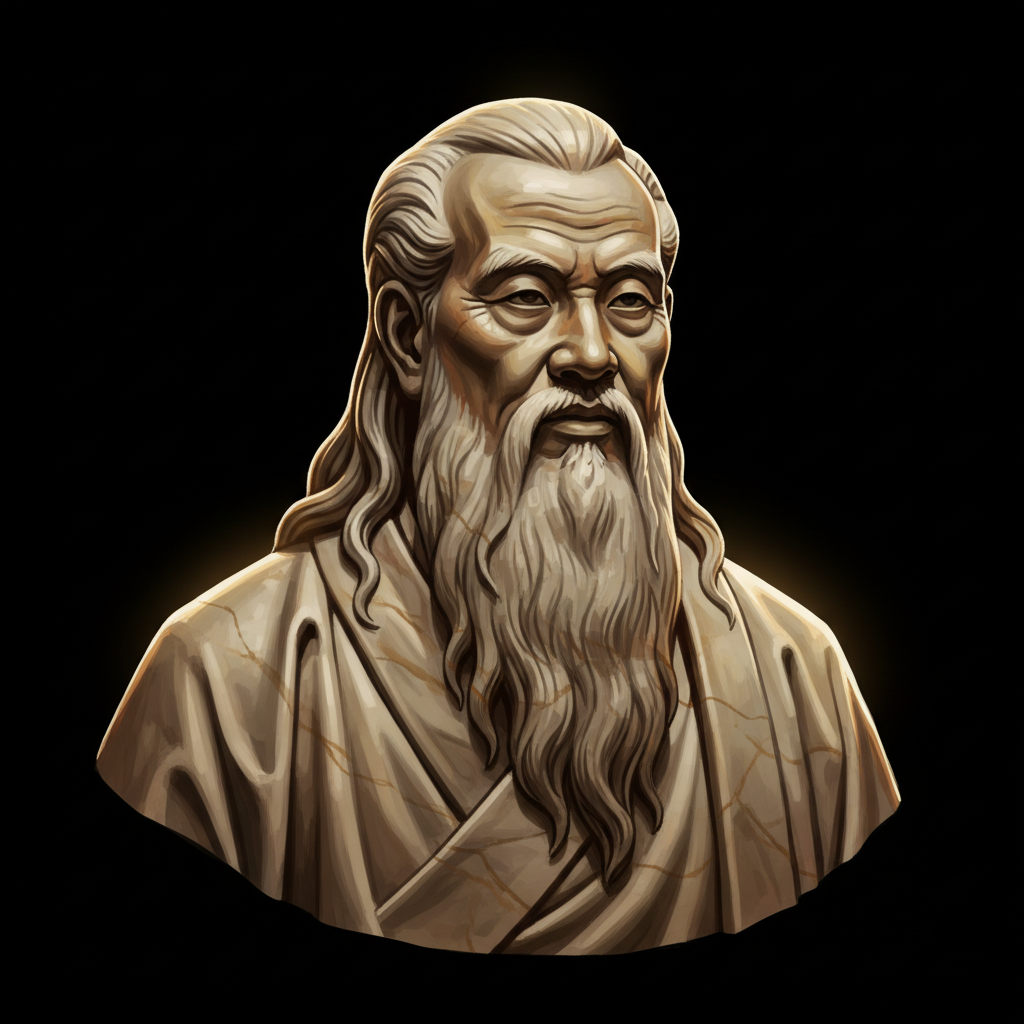
Laozi — "The sage puts his own person last, and yet it is found in the foremost place; he…"
The sage puts his own person last, and yet it is found in the foremost place; he treats his person as foreign to him, and yet it is preserved.
The sage puts his own person last, and yet it is found in the foremost place; he treats his person as foreign to him, and yet it is preserved.
Click any product to generate a realistic preview. Up to 3 at a time.
* Initial load can take up to 90 seconds — revising the preview in another color is nearly instant.
"The softest thing in the world can overcome the hardest thing in the world."
"To see things in the seed, that is genius."
"Nature does not hurry, yet everything is accomplished."
"The higher the sun rises, the less shadow it casts."
"The Tao is always at ease. It is still, yet it moves the world."
Reputed founder of Taoism and author of the Tao Te Ching, whose wu wei (effortless action) shaped East Asian philosophy. Closely associated with Zhuangzi (later Taoist who extended Laozi's framework). For an intellectual contrast, see Confucius, near-contemporary Chinese sage of social ritual and duty — Confucius systematized social order through ritual and hierarchy; Laozi argued that all such systems were the disease, not the cure — the two founding poles of Chinese moral philosophy.
Found in 1 providers: gemini
1 source checked
By stepping aside and not chasing status, the wise person ends up being respected and placed at the front by others. By not clinging to self-protection or personal gain, they actually remain safe and whole. Selflessness isn't weakness or loss; it's a practical strategy that produces the very outcomes people grasp for when they push themselves forward, protect their ego, and demand recognition.
Laozi, credited founder of Taoism and traditionally a record-keeper in the Zhou royal archives, reportedly withdrew from court life rather than seek influence. This saying mirrors his core teachings of wu wei, or effortless non-striving, and humility as strength. Legend says he left society quietly on a water buffalo, embodying the very detachment described here: abandoning position and self-interest, yet becoming one of the most enduringly revered figures in Chinese thought.
Laozi lived during the late Zhou dynasty, an age of collapsing central authority, warring states, and rival philosophers competing for rulers' ears. Confucians urged ambition, ritual, and active governance; strategists pushed power and control. In that climate of striving courtiers and violent ambition, teaching rulers and scholars to step back, yield, and place themselves last was radical counter-advice, offering stability through humility when everyone else chased rank, reputation, and survival through aggression.
AI-generated insights based on extensive research and information for context. Factual errors? Email [email protected].
Your cart is empty