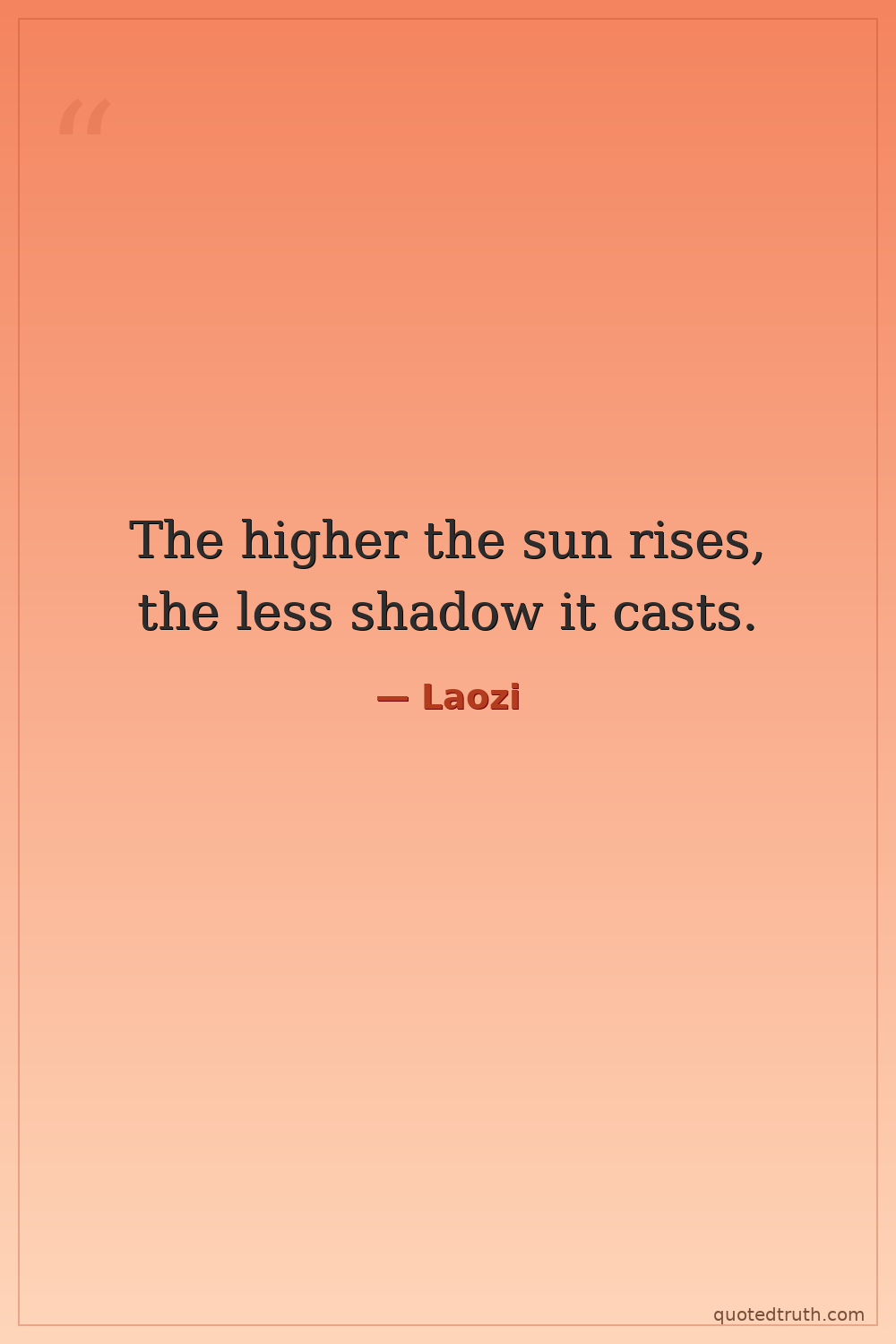
Laozi — "The higher the sun rises, the less shadow it casts."
The higher the sun rises, the less shadow it casts.
The higher the sun rises, the less shadow it casts.
Click any product to generate a realistic preview. Up to 3 at a time.
* Initial load can take up to 90 seconds — revising the preview in another color is nearly instant.
"The more prohibitions there are, the poorer the people will be. The more sharp weapons the people have, the more trouble there will be in the country. The more clever and skillful man is, the more str…"
"The universe is a sacred vase. It should not be tampered with."
"Governing a large country is like frying a small fish."
"Great acts are made up of small deeds."
"The value of teaching without words and accomplishing without action is understood by few in the world."
Reputed founder of Taoism and author of the Tao Te Ching, whose wu wei (effortless action) shaped East Asian philosophy. Closely associated with Zhuangzi (later Taoist who extended Laozi's framework). For an intellectual contrast, see Confucius, near-contemporary Chinese sage of social ritual and duty — Confucius systematized social order through ritual and hierarchy; Laozi argued that all such systems were the disease, not the cure — the two founding poles of Chinese moral philosophy.
Found in 1 providers: grok
1 source checked
As something or someone rises to greater prominence, illumination, or virtue, the darkness, distortion, and hidden corners surrounding them shrink. Full clarity leaves no room for concealment or deception. Applied to people, it means that a person who lives with complete openness, wisdom, and integrity leaves little trace of ego, pretense, or wrongdoing. The brighter you become inwardly, the less of a false self you project onto the world.
Laozi worked as a keeper of royal archives, surrounded by court intrigue where officials cast long shadows of ambition and deceit. His Tao Te Ching repeatedly praises the sage who empties himself, acts without striving, and radiates quiet virtue. This saying mirrors his teaching that the truly enlightened person sheds ego rather than accumulating status, becoming transparent rather than imposing, aligned with the Tao rather than casting the shadow of a forceful self.
Laozi lived during the late Zhou dynasty, an age of collapsing central authority sliding toward the Warring States period. Rival lords, scheming ministers, and ritualistic Confucian reformers jockeyed for moral and political high ground, each casting long shadows of ambition. Against this backdrop of performative virtue and power games, Laozi's image of a high sun erasing shadows offered a radical alternative: rulers and thinkers should withdraw ego, embrace simplicity, and let natural clarity replace coercive posturing.
AI-generated insights based on extensive research and information for context. Factual errors? Email [email protected].
Your cart is empty