Laozi — "The sage wears coarse clothes and carries jewels in his bosom."
The sage wears coarse clothes and carries jewels in his bosom.
The sage wears coarse clothes and carries jewels in his bosom.
Click any product to generate a realistic preview. Up to 3 at a time.
* Initial load can take up to 90 seconds — revising the preview in another color is nearly instant.
"The more prohibitions there are, the poorer the people become. The more sharp weapons the people have, the more troubled the state becomes. The more cunning and skill man possesses, the more peculiar …"
"The sage puts his own person last, and yet it is found in the foremost place; he treats his person as foreign to him, and yet it is preserved."
"The soft and the weak overcome the hard and the strong."
"When gold and jade fill the hall, their possessor cannot keep them safe. When wealth and honors lead to arrogance, this brings disaster upon itself. When the work is done and the name is established, …"
"The heavy is the root of the light. The still is the master of the restless."
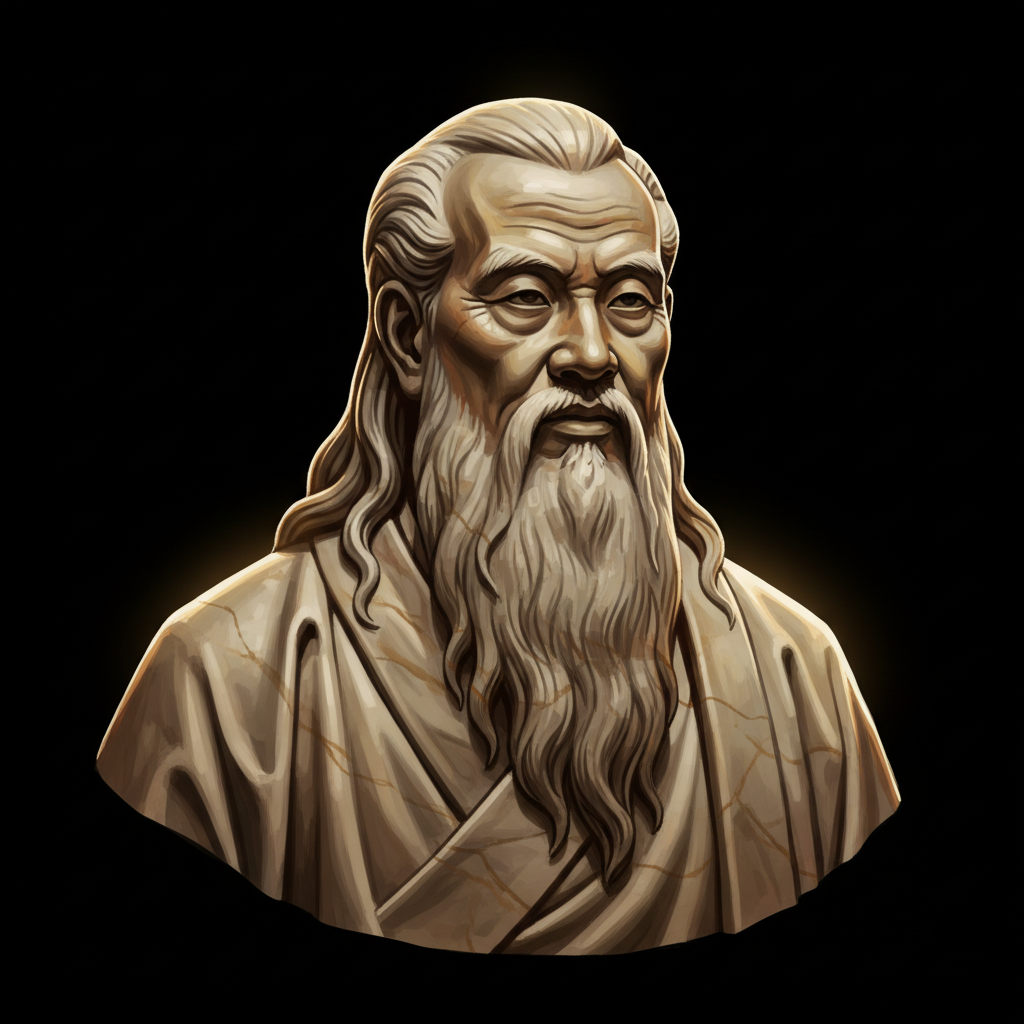
Reputed founder of Taoism and author of the Tao Te Ching, whose wu wei (effortless action) shaped East Asian philosophy. Closely associated with Zhuangzi (later Taoist who extended Laozi's framework). For an intellectual contrast, see Confucius, near-contemporary Chinese sage of social ritual and duty — Confucius systematized social order through ritual and hierarchy; Laozi argued that all such systems were the disease, not the cure — the two founding poles of Chinese moral philosophy.
Found in 1 providers: grok
1 source checked
True worth lives beneath a plain surface. The wise person dresses simply and avoids showing off, yet carries something precious inside—deep understanding, inner peace, or moral clarity. The outward look is humble on purpose, because broadcasting status invites envy and distorts judgment. What matters is hidden from casual view and shared only with those who look past appearances rather than chasing approval, applause, or the markers of wealth.
Laozi, traditionally a keeper of royal archives in the Zhou court, reportedly rejected official prestige and left civilization to live quietly, embodying this saying. As the founder of Taoism, he taught wu wei, humility, and the emptying of ego. The Tao Te Ching repeatedly praises the sage who softens his brightness and blends with dust, holding inner Tao while refusing display—exactly the coarse cloak, hidden jewel image he describes here.
Laozi lived during the late Zhou period, likely the Spring and Autumn or early Warring States era, when rival lords competed through display, titles, luxurious robes, and ritual pageantry. Advisors wore rank on their sleeves and jockeyed for court favor amid constant warfare. Against this showy, status-obsessed backdrop, praising plain dress and hidden depth was a pointed critique, aligning with emerging Taoist and recluse traditions that rejected Confucian ceremony and aristocratic performance.
AI-generated insights based on extensive research and information for context. Factual errors? Email [email protected].
Your cart is empty