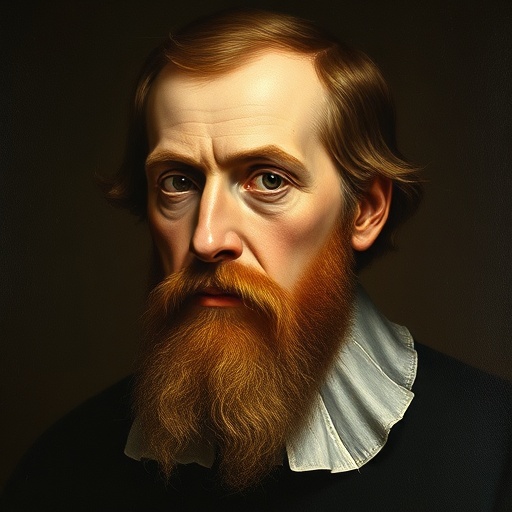
John Calvin — "Our salvation depends on the free election of God."
Our salvation depends on the free election of God.
Our salvation depends on the free election of God.
Click any product to generate a realistic preview. Up to 3 at a time.
* Initial load can take up to 90 seconds — revising the preview in another color is nearly instant.
"This is not laid down on human authority; it is God who speaks and prescribes a perpetual rule for his Church."
"We are not called to be popular, but to be faithful."
"The torture of a bad conscience is the hell of a living soul."
"Many people have accused me of such ferocious cruelty that I would like to kill again the man I have destroyed. Not only am I indifferent to their comments, but I rejoice in the fact that they spit in…"
"The more we know God, the more we humble ourselves."
French theologian whose Institutes of the Christian Religion (1536) systematized Protestant Reformed doctrine, including predestination. Closely associated with Martin Luther (Reformation founder, Calvin's predecessor). For an intellectual contrast, see Jacobus Arminius, Dutch Reformed theologian (1560-1609) — Arminius's rejection of strict double-predestination founded Arminianism — the theological tradition modern Methodism, most evangelicalism, and Pentecostalism descend from. The Calvinist-Arminian debate has divided Protestantism for 400 years.
Found in 1 providers: grok
1 source checked
Salvation is not earned through good deeds, religious rituals, or personal effort — it is entirely determined by God's sovereign choice, made freely and independent of anything a human does or deserves. No person can influence whether they are saved; that decision rests wholly with God. This removes human achievement from the equation and places ultimate spiritual authority in divine will alone, humbling any claim that people can secure their own eternal fate.
Calvin built his entire theological system around predestination — the idea that God elects specific individuals for salvation before they are born. His landmark work, Institutes of the Christian Religion, argued this doctrine exhaustively. As a lawyer-turned-reformer governing Geneva's religious life, Calvin saw God's absolute sovereignty as non-negotiable. He rejected any theology granting humans a cooperative role in salvation, making free election the defining pillar separating Reformed theology from both Catholicism and other Protestant traditions.
During the 16th-century Reformation, the Catholic Church taught that salvation was mediated through sacraments, indulgences, and priestly authority — giving the institutional church enormous power over souls. Calvin's assertion that God alone freely elects the saved was a direct assault on that framework. Europe was splintering over these questions amid religious wars and executions. Declaring salvation purely divine removed clergy as spiritual gatekeepers and threatened the Church's political and economic grip on European society.
AI-generated insights based on extensive research and information for context. Factual errors? Email [email protected].
Your cart is empty