What it means
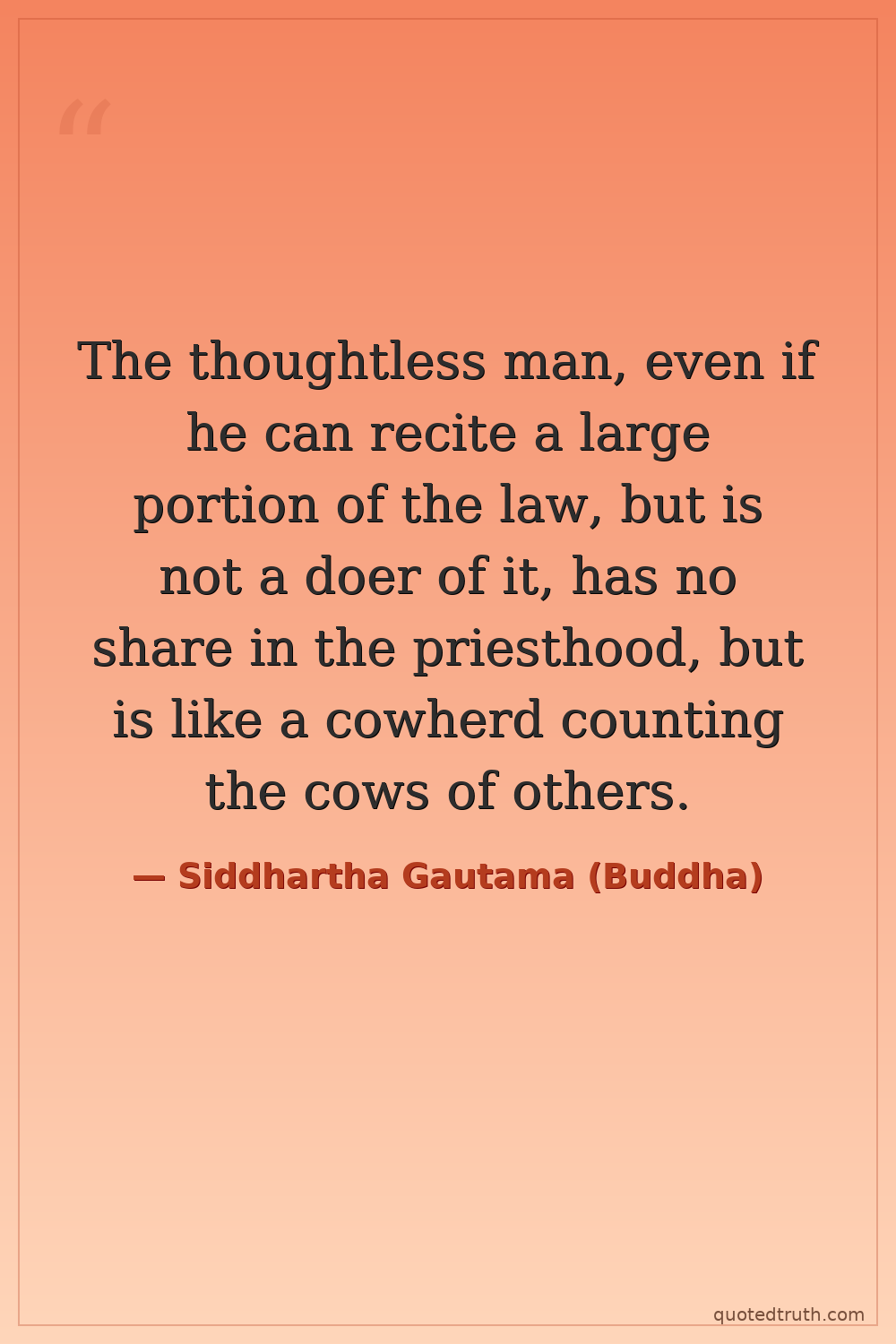
Memorizing scripture or religious teachings without actually living by them is worthless. You can quote doctrine all day, but if you don't put it into practice, you're just parroting words that belong to someone else. Real spiritual progress comes from doing, not reciting. A person who knows the rules but never follows them gains nothing from that knowledge, the way a hired hand counting another farmer's cattle owns none of them.
Relevance to Siddhartha Gautama (Buddha)
The Buddha spent six years testing teachings through direct practice rather than accepting them through study or tradition. He rejected the Brahmin priestly class's reliance on Vedic memorization and ritual, insisting awakening came through lived meditation, ethical conduct, and insight. This verse, from the Dhammapada, reflects his core pragmatic message: the Dharma is a raft to use, not a text to recite. Practice defines the true follower, not credentials.
The era
In 5th-century BCE India, the Brahmin priesthood held religious authority through memorized Vedic hymns, complex rituals, and caste birthright. Spiritual status came from lineage and recitation, not conduct. The Buddha's movement challenged this directly, opening liberation to anyone regardless of caste who practiced the path. This saying was radical because it stripped the word 'priesthood' from ritual specialists and redefined it around behavior, threatening an entrenched religious economy built on sacred-text performance.
AI-generated insights based on extensive research and information for context. Factual errors? Email [email protected].