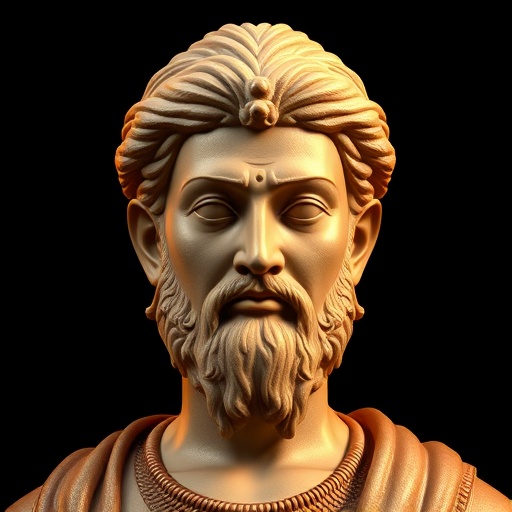
Mahavira — "Look at the birds, how they live in the present, with no thought for the morrow."
Look at the birds, how they live in the present, with no thought for the morrow.
Look at the birds, how they live in the present, with no thought for the morrow.
Click any product to generate a realistic preview. Up to 3 at a time.
* Initial load can take up to 90 seconds — revising the preview in another color is nearly instant.
"The soul is the only reality; everything else is transient."
"One should not steal."
"Every living being, great or small, possesses a soul."
"The world is full of suffering. The cause of suffering is attachment. The cessation of suffering is detachment."
"The greatest penance is to bear all hardships with equanimity."
24th and last Tirthankara of Jainism, whose teachings of strict ahimsa (non-violence), aparigraha (non-attachment), and karma reshaped ancient Indian religion. Closely associated with The Buddha (near-contemporary moral revolutionary, also reacting against Vedic ritualism). For an intellectual contrast, see Vedic Brahmanical ritual sacrifice, the animal-sacrifice-centered Vedic religion of his era — Mahavira's ahimsa demanded total non-violence, including not eating root vegetables that kill the plant — a maximum-distance ethical move from the Vedic priestly tradition that ritually sacrificed cattle and horses. The two cleanest poles of ancient Indian religious ethics.
Found in 1 providers: grok
1 source checked
The quote urges present-moment awareness over anxiety about the future. Birds don't plan for tomorrow—they exist fully in each moment. It calls humans to release mental burdens of anticipation and worry, recognizing that constant future-focused thinking creates suffering. True peace comes from complete engagement with what is happening right now. This is a practical instruction: stop projecting, stop hoarding energy for imagined futures, and simply be alive in the present.
Mahavira renounced his royal family and all possessions at age 30, spending 12 years as a wandering ascetic with no shelter, plans, or provisions—living exactly as birds do. His foundational teaching of aparigraha (non-possessiveness) makes present-moment living essential to Jain liberation. He taught that clinging to anticipated futures generates karma, trapping souls in rebirth cycles. This quote isn't metaphor for him—it describes how he literally lived while seeking enlightenment.
In 6th-century BCE northeastern India, Vedic Brahmanism dominated through elaborate rituals promising future rewards—priests sold heavenly outcomes for present sacrifices, monetizing anxiety about what comes next. Mahavira's shramana movement directly rejected this transactional religion. The broader Axial Age saw simultaneous philosophical revolutions globally; in India, Jainism and Buddhism both emerged challenging ritual hierarchy. Urging bird-like present awareness was a radical counter-cultural act against an entire religious economy built on future-fear.
AI-generated insights based on extensive research and information for context. Factual errors? Email [email protected].
Your cart is empty