Mahavira — "The soul is permanent and eternal, while the body is temporary and perishable."
The soul is permanent and eternal, while the body is temporary and perishable.
The soul is permanent and eternal, while the body is temporary and perishable.
Click any product to generate a realistic preview. Up to 3 at a time.
* Initial load can take up to 90 seconds — revising the preview in another color is nearly instant.
"The path to liberation is difficult, but it is the only path to true happiness."
"A wise man should abstain from killing any living being."
"He who knows one’s own soul knows the souls of all beings."
"Patience is the highest form of virtue."
"Respect for all living beings is Jainism."
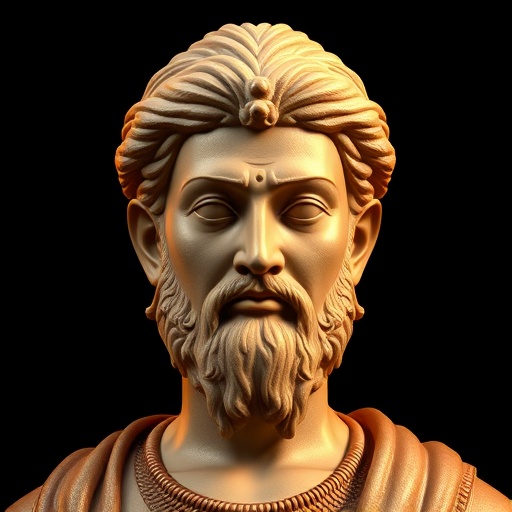
24th and last Tirthankara of Jainism, whose teachings of strict ahimsa (non-violence), aparigraha (non-attachment), and karma reshaped ancient Indian religion. Closely associated with The Buddha (near-contemporary moral revolutionary, also reacting against Vedic ritualism). For an intellectual contrast, see Vedic Brahmanical ritual sacrifice, the animal-sacrifice-centered Vedic religion of his era — Mahavira's ahimsa demanded total non-violence, including not eating root vegetables that kill the plant — a maximum-distance ethical move from the Vedic priestly tradition that ritually sacrificed cattle and horses. The two cleanest poles of ancient Indian religious ethics.
Found in 1 providers: grok
1 source checked
Your inner self — your consciousness, identity, and moral essence — exists beyond physical death. The body decays and dies, but what you fundamentally are persists. This challenges people to prioritize spiritual development over material comfort, recognizing that physical pleasures and possessions are fleeting while ethical character and spiritual progress have lasting consequence beyond any single lifetime.
Mahavira renounced royal life at age 30, abandoning wealth, family, and bodily comfort to pursue spiritual liberation. He practiced extreme asceticism for 12 years, deliberately transcending physical needs. This belief in soul permanence justified his entire path: if the soul outlasts the body, temporary physical suffering is irrelevant compared to achieving moksha — complete liberation of the eternal soul from karmic matter.
Mahavira lived in 6th-century BCE India during an extraordinary philosophical ferment called the Shramana movement, which challenged Brahminical Vedic authority. Rival thinkers — Buddha, Ajita Kesakambali — debated soul existence fiercely. Materialists denied any afterlife; Vedic tradition affirmed Atman. Mahavira's Jain position asserted an independently existing, perfectible soul trapped in karma, offering commoners a liberation path outside expensive Brahmin ritual sacrifices.
AI-generated insights based on extensive research and information for context. Factual errors? Email [email protected].
Your cart is empty