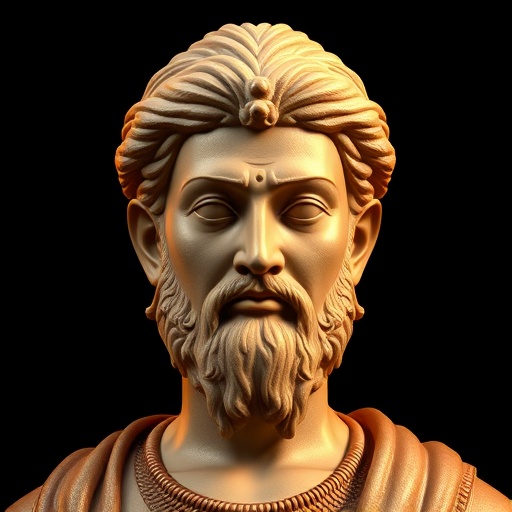
Mahavira — "Patience is the highest form of virtue."
Patience is the highest form of virtue.
Patience is the highest form of virtue.
Click any product to generate a realistic preview. Up to 3 at a time.
* Initial load can take up to 90 seconds — revising the preview in another color is nearly instant.
"The soul is the only reality; everything else is transient."
"He who knows one, knows all."
"All things are impermanent, and the soul is eternal."
"Control of the senses is the highest form of self-control."
"The body is a temporary abode of the soul."
24th and last Tirthankara of Jainism, whose teachings of strict ahimsa (non-violence), aparigraha (non-attachment), and karma reshaped ancient Indian religion. Closely associated with The Buddha (near-contemporary moral revolutionary, also reacting against Vedic ritualism). For an intellectual contrast, see Vedic Brahmanical ritual sacrifice, the animal-sacrifice-centered Vedic religion of his era — Mahavira's ahimsa demanded total non-violence, including not eating root vegetables that kill the plant — a maximum-distance ethical move from the Vedic priestly tradition that ritually sacrificed cattle and horses. The two cleanest poles of ancient Indian religious ethics.
Found in 1 providers: grok
1 source checked
Enduring hardship, frustration, or injustice without snapping, retaliating, or crumbling is harder than any single act of courage. This quote places that sustained inner discipline above all other moral qualities. In modern terms: holding your composure when provoked, waiting without complaint, and absorbing difficulty without passing it on to others isn't weakness — it demands more of a person than most visible acts of goodness ever will.
Mahavira spent twelve years wandering naked across India — attacked by villagers, bitten by animals, mocked by crowds — and responded to none of it with anger or retaliation. This was deliberate: Jainism teaches that every reaction generates karma binding the soul. His concept of kshama, patient forbearance, wasn't metaphor; it was the actual mechanism of his path toward liberation, tested daily against extreme physical suffering and social hostility.
Mahavira lived in 6th-century BCE India during the rise of the Mahajanapada kingdoms — an era of constant warfare, Brahmanical animal sacrifices, and a rigid caste system that defined worth by birth and ritual observance. Declaring patience the supreme virtue was a direct challenge to a culture equating power with military dominance and virtue with correct sacrifice, reorienting ethics away from external performance toward sustained internal self-mastery.
AI-generated insights based on extensive research and information for context. Factual errors? Email [email protected].
Your cart is empty