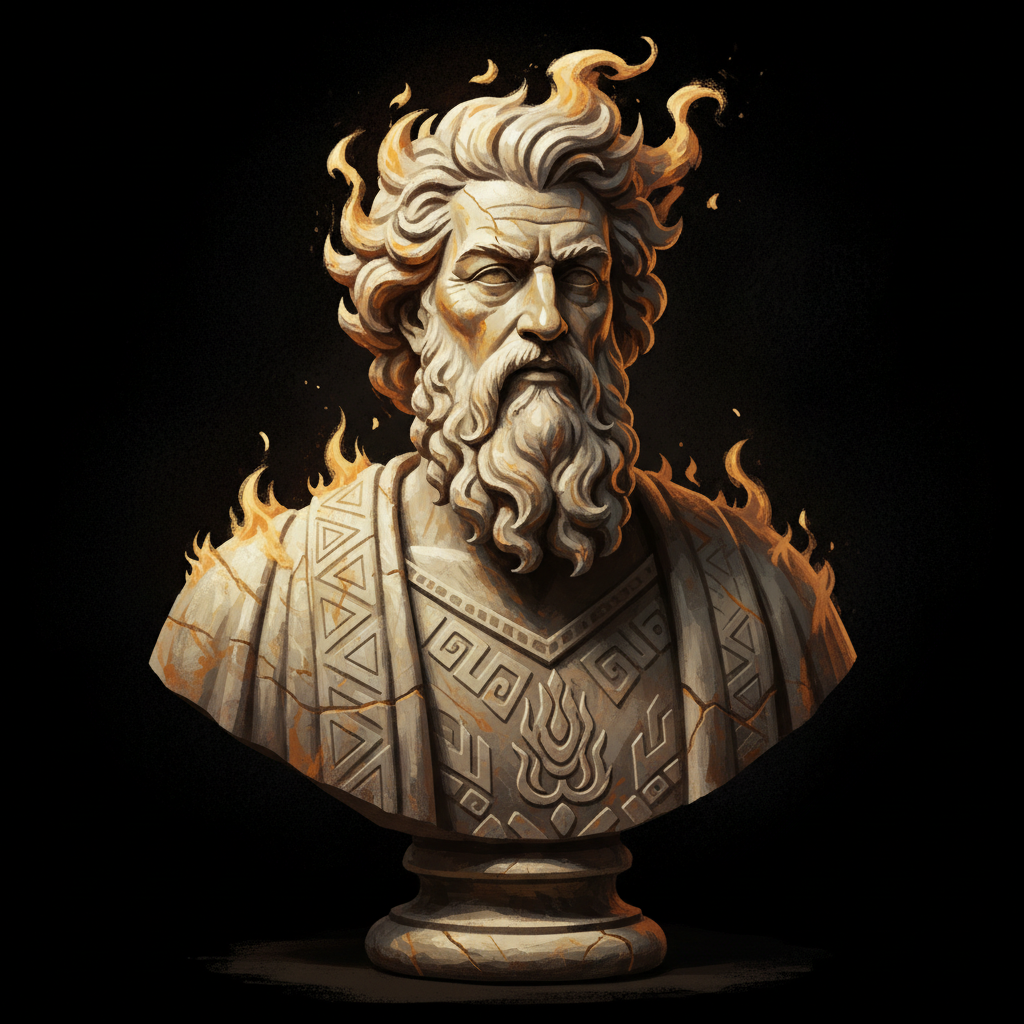
Zoroaster — "The soul of the righteous shall be immortal, the soul of the wicked shall perish…"
The soul of the righteous shall be immortal, the soul of the wicked shall perish.
The soul of the righteous shall be immortal, the soul of the wicked shall perish.
Click any product to generate a realistic preview. Up to 3 at a time.
* Initial load can take up to 90 seconds — revising the preview in another color is nearly instant.
"Always meet petulance with gentleness and perverseness with kindness. A gentle hand can lead even an elephant by a hair. Reply to thine enemy with gentleness."
"The path of Good Thought leads to the Best Existence."
"Taking the first footstep with a good thought, the second with a good word, and the third with a good deed. I entered paradise."
"Therefore, you who are living, make known these doctrines to those who are striving for the Lie, so that they may not bring about a second destruction for themselves."
"Beware of lust; it corrupteth both the body and the mind."
Iranian prophet who founded Zoroastrianism, the first major religion of cosmic dualism between good (Ahura Mazda) and evil (Angra Mainyu). Closely associated with The Buddha (near-contemporary Eastern moral-cosmological revolutionary). For an intellectual contrast, see Friedrich Nietzsche, German philosopher of 'beyond good and evil' — Nietzsche appropriated Zarathustra's name for Thus Spoke Zarathustra (1883) precisely to invert the original's moral cosmology — the historical Zoroaster founded the good-versus-evil framework Nietzsche's character announces the end of.
Found in 1 providers: grok
1 source checked
Good people's inner selves continue on after death, while bad people's inner selves are destroyed or fade away. Your moral choices in life determine whether part of you lasts forever or simply ends when you die. Righteousness earns a lasting existence beyond the body, but wickedness leads to total oblivion. In short, how you live shapes what, if anything, survives you.
Zoroaster founded one of the earliest religions to teach individual moral judgment after death, framing existence as a cosmic battle between truth (asha) and the lie (druj). As a priest-prophet who reformed older Iranian polytheism, he tied personal ethics directly to the soul's fate, a radical idea that shaped his Gathas and defined Zoroastrian belief about heaven, hell, and accountability.
Zoroaster lived in ancient Iran, likely between 1500 and 1000 BCE, among pastoral tribes worshipping many nature gods through ritual sacrifice. Most neighboring cultures pictured a dim, shared underworld where everyone ended up the same. Introducing a judged afterlife tied to personal righteousness was revolutionary, and these ideas later filtered into Judaism, Christianity, and Islam during the Persian Empire's dominance centuries after his death.
AI-generated insights based on extensive research and information for context. Factual errors? Email [email protected].
Your cart is empty