What it means
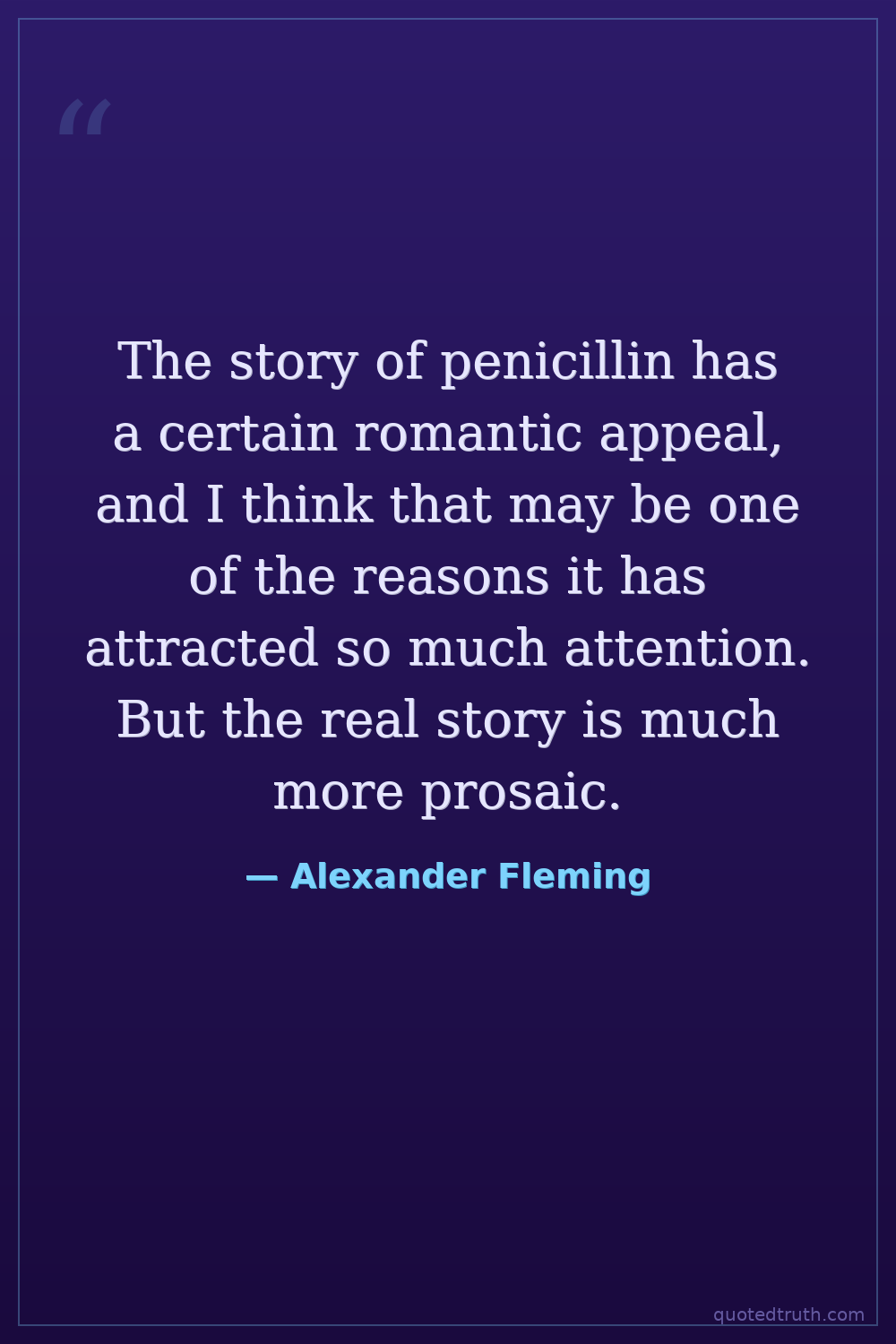
The popular narrative around a discovery often becomes more captivating than the actual events. Fleming is pushing back against romanticized retellings of his work, insisting the truth was mundane, methodical, and unglamorous — not the result of dramatic inspiration or genius. Real scientific progress tends to be incremental and ordinary, not the stuff of legend that the public prefers to celebrate.
Relevance to Alexander Fleming
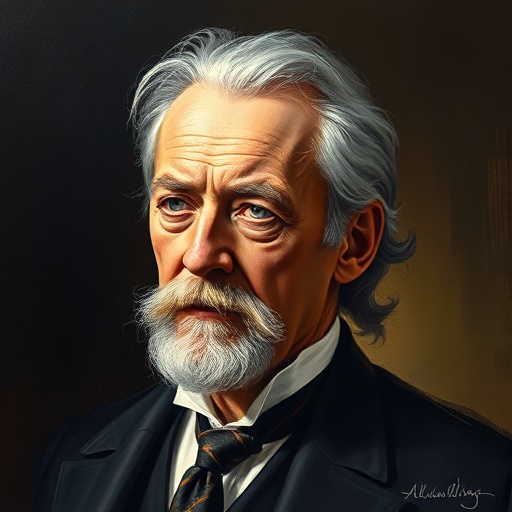
Fleming discovered penicillin in 1928 when mold contaminated a Petri dish — a famously accidental observation. But he spent years doing painstaking follow-up work before the antibiotic era arrived. He was known for modesty and precision, uncomfortable with celebrity. His Nobel Prize (1945) brought enormous public attention that he felt distorted the messy, collaborative, unglamorous reality of laboratory science.
The era
Fleming lived through an era of scientific heroism mythology — when the public craved lone-genius narratives like Einstein or Edison. Post-WWII, penicillin became a symbol of miraculous modern medicine, saving millions of soldiers' lives. This cultural need to make science romantic and heroic often overshadowed the systematic, institutional, and collaborative nature of how actual medical breakthroughs emerge and get developed.
AI-generated insights based on extensive research and information for context. Factual errors? Email [email protected].