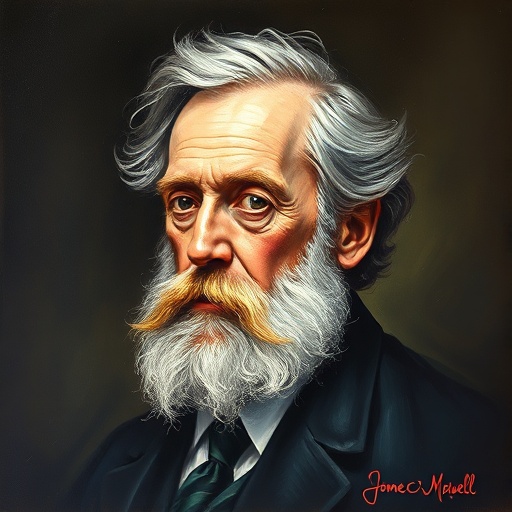
James Clerk Maxwell — "The true beginning of all knowledge is the discovery of something we do not know…"
The true beginning of all knowledge is the discovery of something we do not know.
The true beginning of all knowledge is the discovery of something we do not know.
Click any product to generate a realistic preview. Up to 3 at a time.
* Initial load can take up to 90 seconds — revising the preview in another color is nearly instant.
"I have no doubt that there are many persons who would be very glad to get rid of the ether."
"Science is incompetent to reason upon the creation of matter itself out of nothing. We have reached the utmost limit of our thinking faculties when we have admitted that because matter cannot be etern…"
"The only use of a knowledge of the past is to equip us for the present."
"The only way to avoid being wrong is to say nothing."
"At quite uncertain times and places, The atoms left their heavenly path, And by fortuitous embraces, Engendered all that being hath. And though they seem to cling together, And form 'associations' her…"
Found in 1 providers: grok
1 source checked
Real learning starts the moment you recognize a gap in your own understanding. Until you spot something you cannot explain, you have no reason to investigate, question, or seek answers. Acknowledging ignorance is not a setback but the actual launch point of inquiry. Curiosity needs a target, and that target is whatever puzzles you. Without confronting what you do not know, you only rearrange what you already knew.
Maxwell built his career on chasing puzzles others overlooked, from Saturn's rings to the unification of electricity, magnetism, and light. A devout Christian and humble Scotsman, he openly credited unsolved mysteries as the engine of his work. His equations emerged because he refused to assume existing physics was complete, instead probing the gaps Faraday had hinted at. This quote mirrors his lifelong stance: confessing ignorance was the prerequisite for revolutionary discovery.
Maxwell worked in the mid-1800s, when Victorian science was both confident and unsettled. The Industrial Revolution had supercharged faith in mechanical certainty, yet electricity, thermodynamics, and the nature of light remained mysterious. Cambridge and Edinburgh were producing rigorous experimentalists, while Darwin's 1859 Origin had just proved that humility before nature pays off. In this climate, admitting what science did not yet know was becoming respectable, even essential, fueling the leap toward modern physics.
AI-generated insights based on extensive research and information for context. Factual errors? Email [email protected].
Your cart is empty