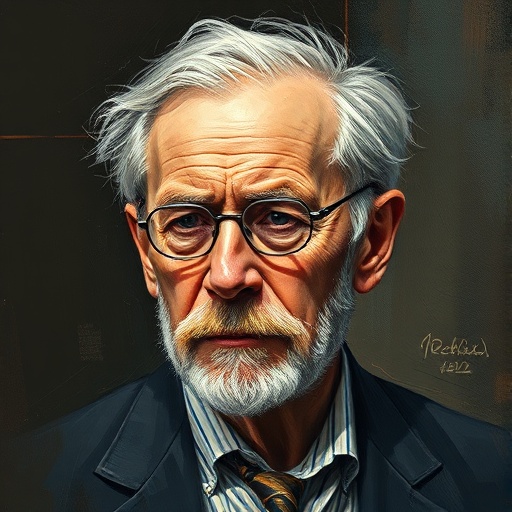
Erwin Schrodinger — "The true path to knowledge is to question everything."
The true path to knowledge is to question everything.
The true path to knowledge is to question everything.
Click any product to generate a realistic preview. Up to 3 at a time.
* Initial load can take up to 90 seconds — revising the preview in another color is nearly instant.
"I am enough of an artist to draw freely upon my imagination."
"The universe is a grand illusion. But it is a very persistent one."
"The greatest obstacle to progress in science is the belief that one knows something which one does not know."
"The most important thing is not to stop questioning. Curiosity has its own reason for existence."
"The best way to escape from the problem is to solve it."
Austrian physicist who shared the 1933 Nobel for the wave equation that bears his name and the famous cat thought-experiment. Closely associated with Werner Heisenberg (matrix-mechanics rival who reached the same physics by different math) and Albert Einstein (his pen-pal on quantum interpretation). For an intellectual contrast, see Niels Bohr, Danish physicist and architect of the Copenhagen interpretation — Schrödinger's cat thought-experiment was specifically designed to ridicule Bohr's 'observer-dependent reality' reading of quantum mechanics — Schrödinger thought the Copenhagen interpretation was absurd; the cat was meant as reductio ad absurdum.
Found in 1 providers: grok
1 source checked
Genuine knowledge isn't passively received—it's earned through relentless skepticism. Accepting inherited wisdom without scrutiny leads to stagnation. To truly understand anything, you must interrogate premises, challenge authority, and be willing to be wrong. Curiosity and doubt aren't obstacles to learning; they are the mechanism. In modern terms: don't just accept an answer—understand why it's true, where it came from, and whether it actually holds up.
Schrödinger embodied this throughout his career. His 1926 wave equation challenged Heisenberg's matrix mechanics, questioning which framework best described quantum reality. His cat paradox directly questioned the Copenhagen interpretation Bohr and colleagues accepted. His 1944 book What is Life? questioned whether physical laws could explain biological heredity, helping inspire Watson and Crick's DNA work. Refusing disciplinary boundaries and institutional consensus, Schrödinger made questioning everything his scientific method, not merely his philosophy.
Schrödinger's peak years spanned the 1920s–1940s, when classical certainties were collapsing. Quantum mechanics dismantled deterministic physics; Einstein's relativity had demolished absolute space and time. Politically, Europe's institutions were crumbling—Schrödinger fled Nazi-annexed Austria in 1938. Heisenberg's uncertainty principle declared fundamental limits on what could even be known. In this climate, questioning everything wasn't philosophical posturing—it was the empirical demand of a science rewriting its own foundations from scratch.
AI-generated insights based on extensive research and information for context. Factual errors? Email [email protected].
Your cart is empty