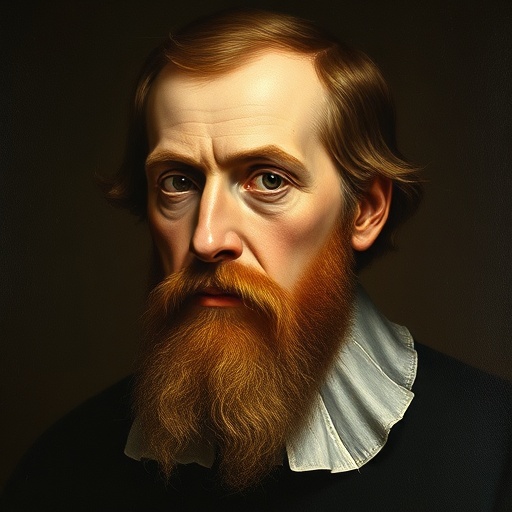
John Calvin — "The true way to learn God's will is to listen to his Word."
The true way to learn God's will is to listen to his Word.
The true way to learn God's will is to listen to his Word.
Click any product to generate a realistic preview. Up to 3 at a time.
* Initial load can take up to 90 seconds — revising the preview in another color is nearly instant.
"...those whom God passes over [praeterit], he condemns [reprobat]; and this he does for no other reason than that he wills to exclude them from the inheritance which he predestines [praedestinat] for …"
"The human mind is, so to speak, a perpetual forge of idols."
"The wicked are a kind of chaff, that the wind driveth away."
"Whoever shall now contend that it is unjust to put heretics and blasphemers to death will knowingly and willingly incur their very guilt."
"God blinds the minds of the reprobate, and hardens their hearts, that they may not believe."
French theologian whose Institutes of the Christian Religion (1536) systematized Protestant Reformed doctrine, including predestination. Closely associated with Martin Luther (Reformation founder, Calvin's predecessor). For an intellectual contrast, see Jacobus Arminius, Dutch Reformed theologian (1560-1609) — Arminius's rejection of strict double-predestination founded Arminianism — the theological tradition modern Methodism, most evangelicalism, and Pentecostalism descend from. The Calvinist-Arminian debate has divided Protestantism for 400 years.
Found in 1 providers: grok
1 source checked
Divine guidance comes from Scripture alone, not from church tradition, papal decree, or personal spiritual experience. This cuts out intermediaries: if you want to know what God requires, read and study the Bible directly. In an age saturated with opinion and noise, it is a call to return to primary sources rather than trusting filtered interpretations. Truth is accessible to anyone who engages honestly with the text.
Calvin spent his life producing biblical commentaries covering nearly every book of Scripture and writing the Institutes of the Christian Religion, a systematic theology grounded entirely in scriptural exegesis. He founded the Geneva Academy to train preachers in biblical exposition. Rejecting papal authority as co-equal with Scripture, he championed sola scriptura as the Reformation's cornerstone. His sermons, often delivered daily, treated Scripture as God's living speech to his people.
The 16th-century Reformation erupted partly because the Catholic Church claimed tradition and papal teaching held equal authority to Scripture. The printing press had made vernacular Bibles newly accessible across Europe. Luther's stand at Worms, Tyndale's English translation, and Calvin's Geneva all turned on who held interpretive authority. Calvin's insistence on Scripture as the singular voice of God was a direct counter to centuries of magisterial tradition defining Christian practice.
AI-generated insights based on extensive research and information for context. Factual errors? Email [email protected].
Your cart is empty