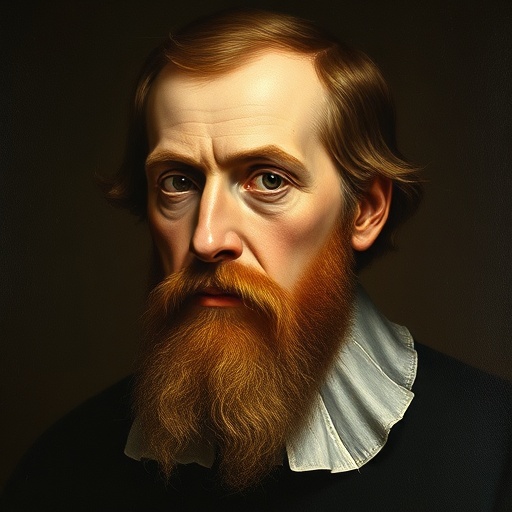
John Calvin — "The true worship of God consists in obeying him."
The true worship of God consists in obeying him.
The true worship of God consists in obeying him.
Click any product to generate a realistic preview. Up to 3 at a time.
* Initial load can take up to 90 seconds — revising the preview in another color is nearly instant.
"We shall never be clearly persuaded, as we ought to be, that our salvation flows from the wellspring of God's free mercy until we come to know his eternal election, which illumines God's grace by this…"
"The church is the mother of all the godly."
"The whole life of a Christian should be a perpetual exercise of repentance."
"We must live as if we were always in the presence of God."
"It is by no means necessary that the righteous should be distinguished from the wicked by external signs."
French theologian whose Institutes of the Christian Religion (1536) systematized Protestant Reformed doctrine, including predestination. Closely associated with Martin Luther (Reformation founder, Calvin's predecessor). For an intellectual contrast, see Jacobus Arminius, Dutch Reformed theologian (1560-1609) — Arminius's rejection of strict double-predestination founded Arminianism — the theological tradition modern Methodism, most evangelicalism, and Pentecostalism descend from. The Calvinist-Arminian debate has divided Protestantism for 400 years.
Found in 1 providers: grok
1 source checked
Genuine religious devotion isn't found in rituals, ceremonies, or outward displays, but in actually living according to divine commands. Real worship is ethical and behavioral—doing what God requires in daily life—not liturgical performance or sacred spectacle. If you truly revere God, you act accordingly. Ceremonial observance without moral obedience is hollow theater. The substance of authentic faith is compliance with divine will, not the frequency or grandeur of one's religious observances.
Calvin governed Geneva as a theocratic city-state, enforcing moral codes he believed Scripture demanded. His Institutes of the Christian Religion systematized Reformed theology around God's absolute sovereignty and Scripture's authority. He rejected Catholic sacraments and elaborate ceremony as human additions obscuring true piety. For Calvin, predestination meant God's elect demonstrated their status through disciplined, obedient lives—making this equation of worship with obedience the cornerstone of his entire theological and civic project.
Calvin wrote during the height of the Protestant Reformation, when Europe was fracturing over what constituted authentic Christianity. The Catholic Church's sacramental system—indulgences, pilgrimages, elaborate Mass rituals, veneration of saints—was the dominant model of worship. Reformers argued these were human inventions distracting from Scripture's commands. With wars of religion erupting across France, Germany, and the Netherlands, Calvin's insistence that true worship meant obedience rather than ceremony was both a theological claim and a political declaration.
AI-generated insights based on extensive research and information for context. Factual errors? Email [email protected].
Your cart is empty