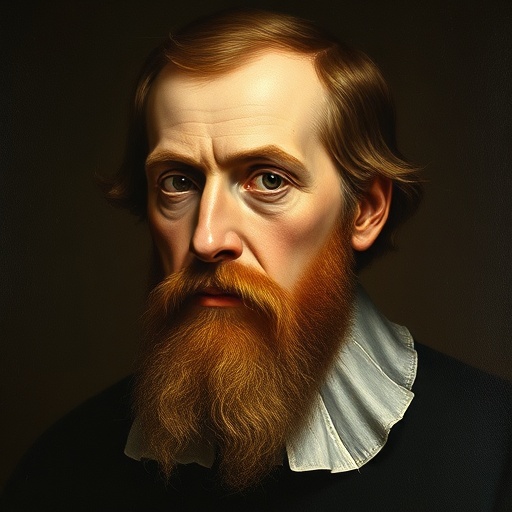
John Calvin — "The whole life of a Christian should be a perpetual exercise of repentance."
The whole life of a Christian should be a perpetual exercise of repentance.
The whole life of a Christian should be a perpetual exercise of repentance.
Click any product to generate a realistic preview. Up to 3 at a time.
* Initial load can take up to 90 seconds — revising the preview in another color is nearly instant.
"God has a secret counsel, by which he chooses whom he will, and rejects whom he will."
"The decree is dreadful, I confess. Yet no one can deny that God foreknew what end man was to have before he created him, and consequently foreknew because he so ordained by his decree."
"...those whom God passes over [praeterit], he condemns [reprobat]; and this he does for no other reason than that he wills to exclude them from the inheritance which he predestines [praedestinat] for …"
"Without knowledge of self there is no knowledge of God."
"Whoever shall maintain that wrong is done to heretics and blasphemers in punishing them makes himself an accomplice in their crime."
French theologian whose Institutes of the Christian Religion (1536) systematized Protestant Reformed doctrine, including predestination. Closely associated with Martin Luther (Reformation founder, Calvin's predecessor). For an intellectual contrast, see Jacobus Arminius, Dutch Reformed theologian (1560-1609) — Arminius's rejection of strict double-predestination founded Arminianism — the theological tradition modern Methodism, most evangelicalism, and Pentecostalism descend from. The Calvinist-Arminian debate has divided Protestantism for 400 years.
Found in 1 providers: grok
1 source checked
Repentance isn't a one-time event or occasional ritual but a continuous, lifelong orientation of the soul. Every day, a Christian examines their failures against God's standards and turns back toward grace. It's not a guilt spiral but an ongoing humility—recognizing permanent human fallibility while relying on divine forgiveness as the constant backdrop of daily life. Repentance is a posture, not a transaction.
Calvin shaped Reformed theology from Geneva, running a morally disciplined city-state and authoring the Institutes of the Christian Religion. His core doctrine held that humans are totally depraved—permanently inclined toward sin. This made perpetual repentance logically necessary: if sin is never fully eradicated in life, turning back to God must be continual. He also rejected Catholic sacramental confession as the gatekeeper of forgiveness, making personal ongoing repentance central to Christian identity.
The Protestant Reformation dismantled the Catholic sacramental system, including formal confession where priests granted absolution for sins. In Calvin's 16th-century Europe this was explosive—if priests no longer controlled forgiveness, what replaced penance? Calvin answered: a lived, interior turning to God sustained throughout life. Meanwhile the Council of Trent (1545–1563) was codifying Catholic doctrine in direct opposition, making Calvin's framing of repentance as continuous personal practice a defining theological fault line of the age.
AI-generated insights based on extensive research and information for context. Factual errors? Email [email protected].
Your cart is empty