What it means
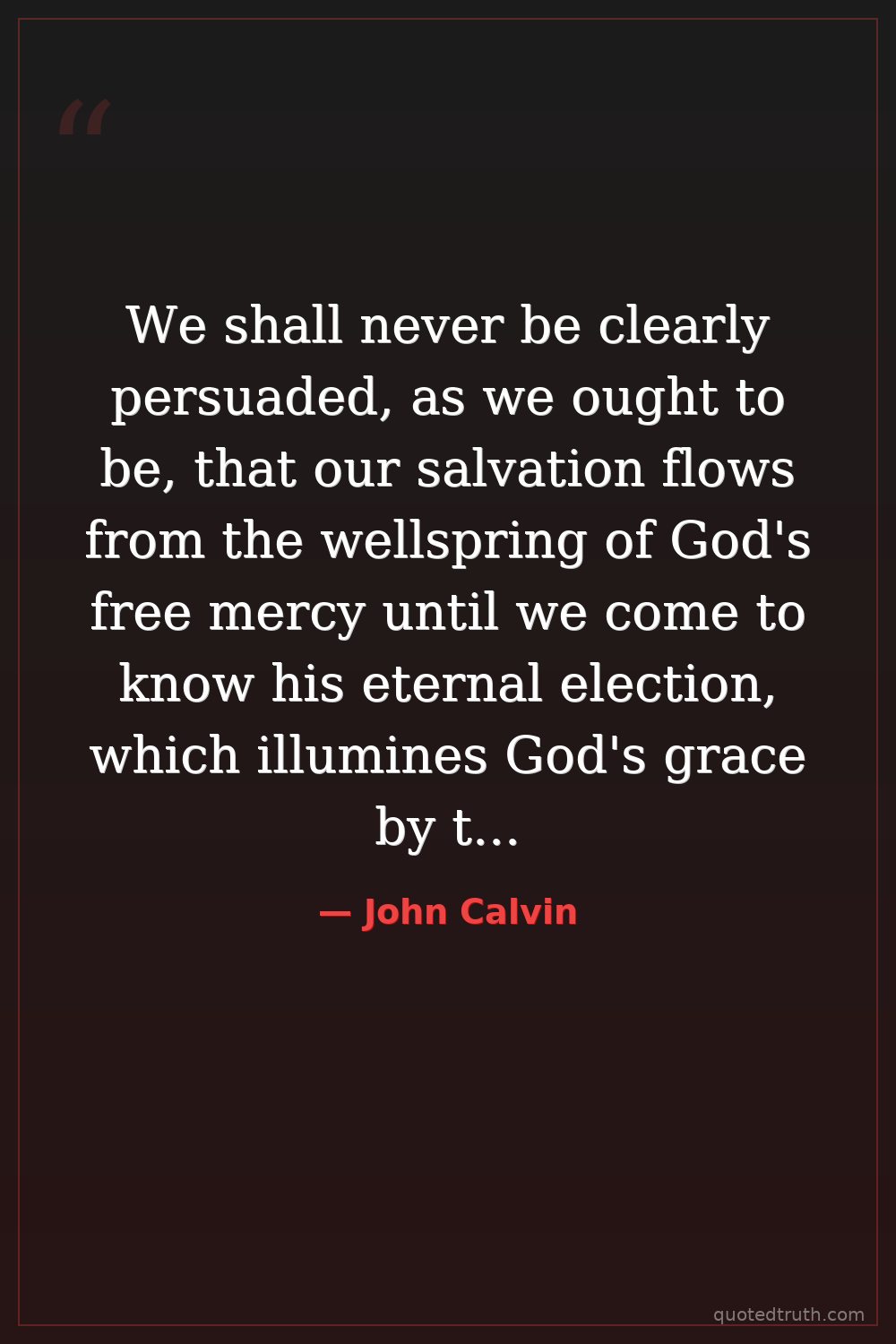
Calvin argues that humans cannot truly grasp salvation as pure, unearned gift until they accept predestination. If God saved everyone indiscriminately, mercy would feel automatic rather than free. Election makes grace visible precisely through contrast: God chooses certain individuals for salvation purely by sovereign will, withholding that gift from others. Only this stark asymmetry, Calvin insists, forces the mind to recognize salvation as wholly unmerited divine mercy rather than something humanity earns, claims, or deserves.
Relevance to John Calvin
Calvin built his entire theological system around God's absolute sovereignty. His Institutes of the Christian Religion, first published 1536 and expanded through 1559, made double predestination the backbone of Reformed Christianity. Running Geneva's church for decades, he enforced this doctrine with legal precision—his training at Orléans shaped his systematic rigor. For Calvin, election was not cruelty but logical necessity: it was the only framework that preserved grace as genuinely free rather than a reward humanity could achieve or forfeit.
The era
Calvin wrote during the Reformation's critical decades, when Europe fractured over how salvation worked. Luther's 1517 revolt had shattered Rome's monopoly on grace but left unanswered why some believed and others rejected the gospel. The Council of Trent, convened 1545, was reasserting works-based Catholic doctrine. Religious wars were igniting across France, Germany, and the Low Countries. Calvin's election doctrine answered the Reformation's deepest question systematically: salvation belonged entirely to God's sovereign will, stripping away Catholic sacramental merit and Anabaptist human-choice frameworks simultaneously.
AI-generated insights based on extensive research and information for context. Factual errors? Email [email protected].