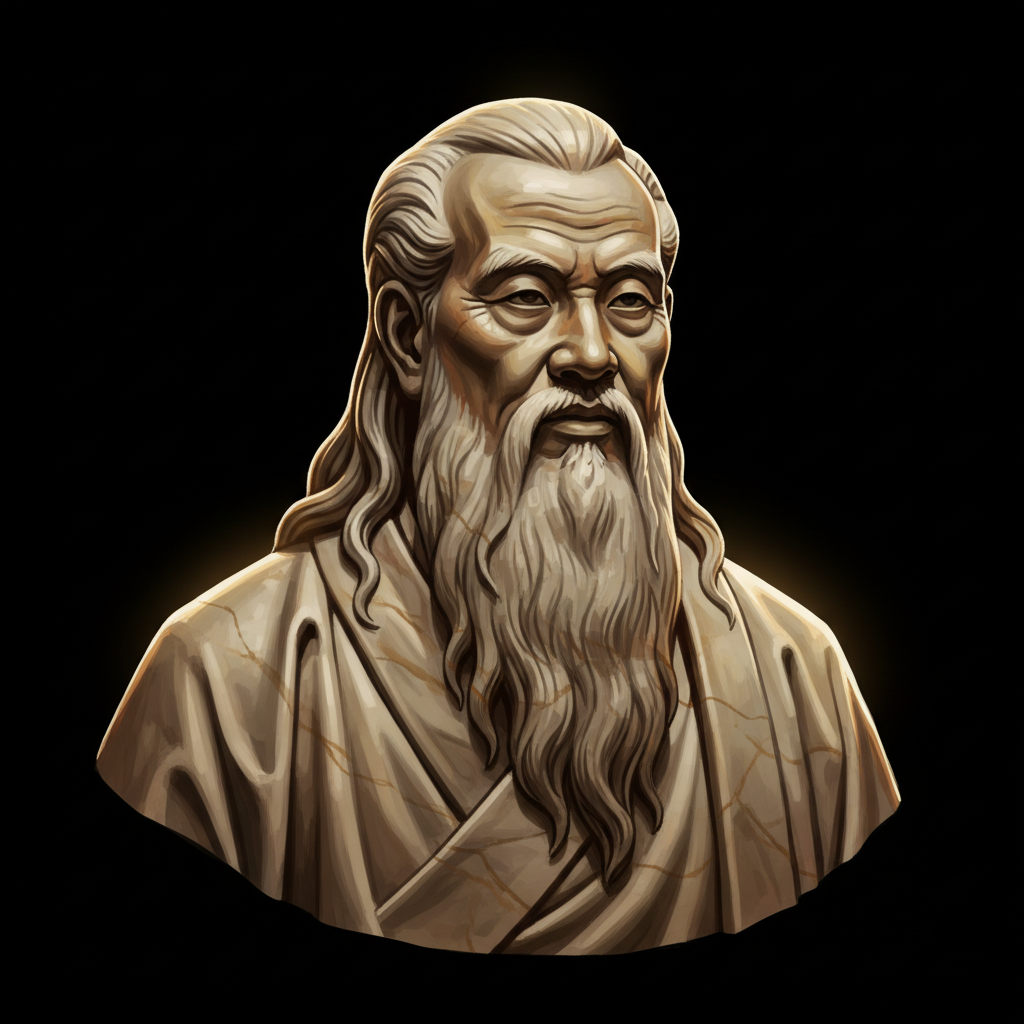
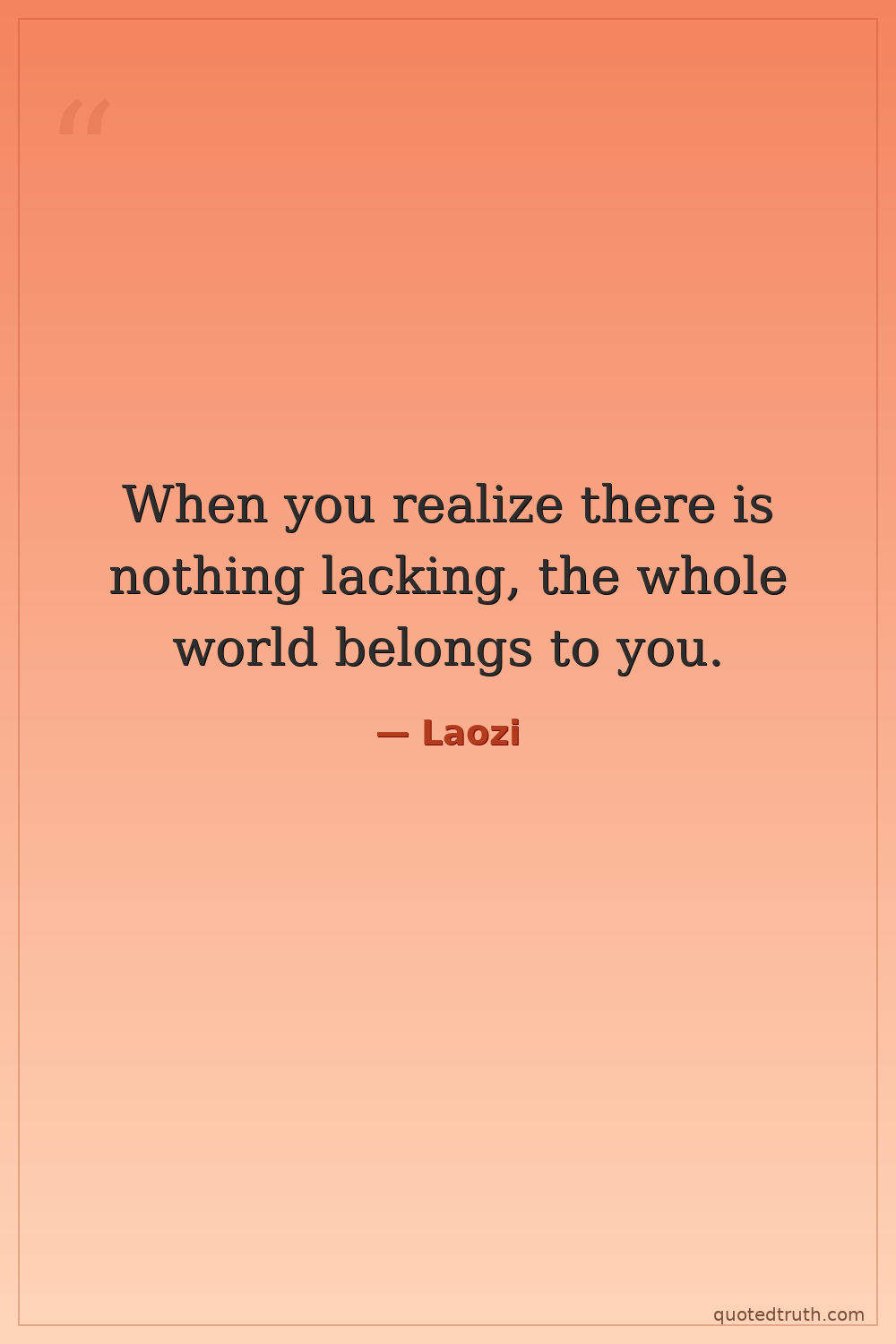
Laozi — "When you realize there is nothing lacking, the whole world belongs to you."
When you realize there is nothing lacking, the whole world belongs to you.
When you realize there is nothing lacking, the whole world belongs to you.
Click any product to generate a realistic preview. Up to 3 at a time.
* Initial load can take up to 90 seconds — revising the preview in another color is nearly instant.
"The Way that can be told of is not an unvarying way."
"Yield and overcome; Bend and be straight; Empty and be full; Wear out and be new; Have little and gain; Have much and be confused."
"The sage has no mind of his own. He takes the mind of the people as his mind."
"Pursue without interfering."
"The greatest villain is the one who tries to do good."
Reputed founder of Taoism and author of the Tao Te Ching, whose wu wei (effortless action) shaped East Asian philosophy. Closely associated with Zhuangzi (later Taoist who extended Laozi's framework). For an intellectual contrast, see Confucius, near-contemporary Chinese sage of social ritual and duty — Confucius systematized social order through ritual and hierarchy; Laozi argued that all such systems were the disease, not the cure — the two founding poles of Chinese moral philosophy.
Found in 1 providers: grok
1 source checked
Contentment is the key to abundance. When you stop chasing what you think you're missing and recognize you already have enough, the entire world feels available to you. Desire creates a sense of scarcity; letting go of that craving reveals sufficiency everywhere. The person who needs nothing gains access to everything, because no situation can impoverish someone who isn't counting what they lack.
Laozi championed wu wei, effortless action rooted in alignment with the Tao, and warned against grasping, ambition, and accumulation. As a reputed archivist who abandoned court life for a quiet retreat westward, he modeled the sufficiency he preached. The Tao Te Ching repeatedly teaches that the sage who knows enough is rich, and that contentment outlasts possession. This saying distills his central conviction that wanting less yields more.
Laozi lived during the turbulent late Zhou dynasty, an era of collapsing feudal order, constant warfare between rival states, and competing philosophical schools vying to advise rulers. Confucians prescribed ritual and hierarchy; Legalists prescribed harsh control. Amid this anxious striving for power and territory, Laozi's counsel of contentment and non-contention offered a radical alternative, suggesting inner sufficiency rather than outward conquest was the true path through a fractured, acquisition-obsessed age.
AI-generated insights based on extensive research and information for context. Factual errors? Email [email protected].
Your cart is empty