What it means
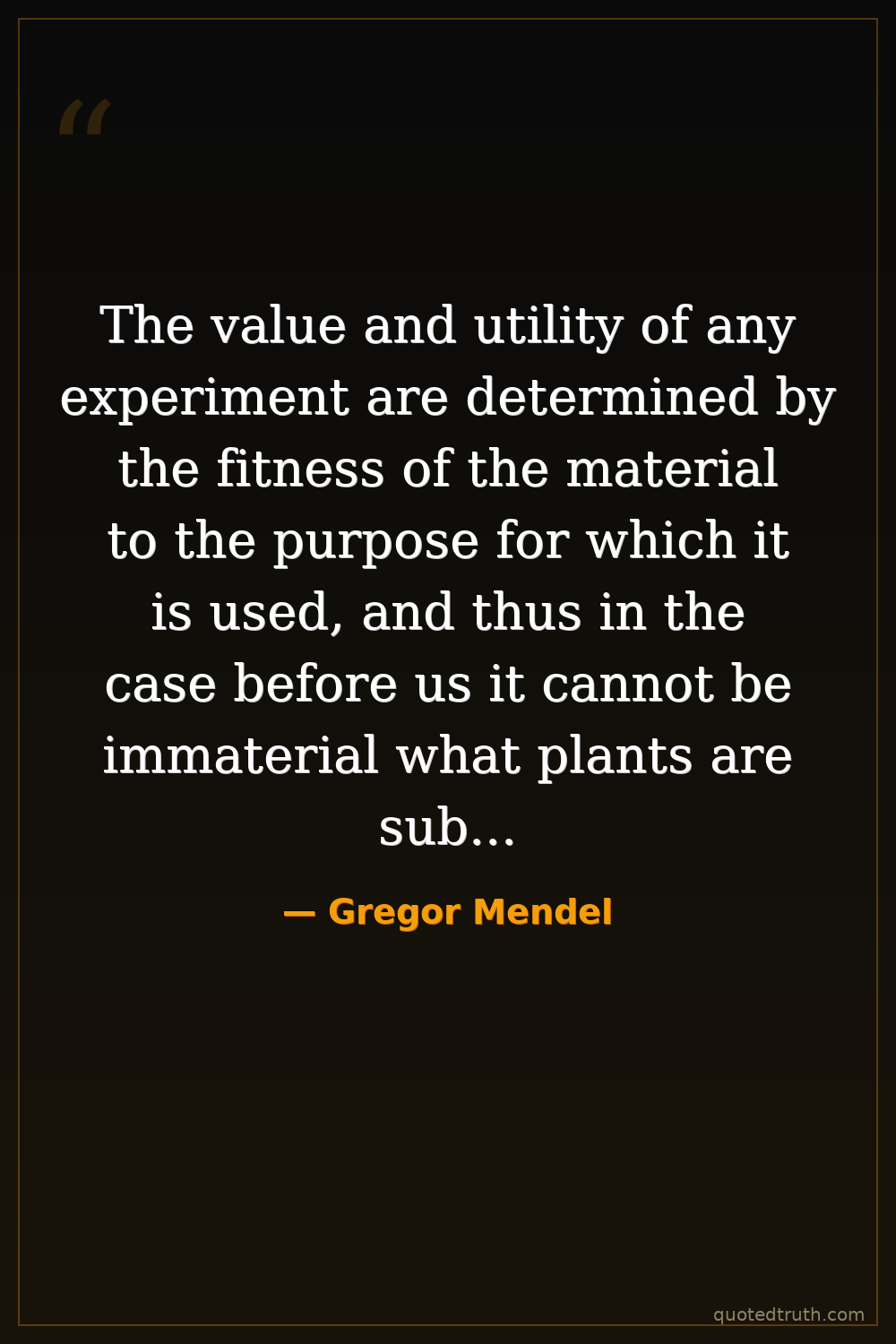
An experiment's worth hinges on selecting the right subjects and designing the right method. Picking unsuitable material or a flawed approach guarantees meaningless results, no matter how carefully you execute. Good science isn't just about running trials — it's about choosing what to test and how before you begin. The match between question, material, and method determines whether findings are trustworthy and illuminating or simply noise.
Relevance to Gregor Mendel
Mendel spent years pre-selecting garden pea plants with sharply distinct, heritable traits — seed color, plant height, pod shape — before running a single cross. This deliberate material selection was why he succeeded where contemporaries failed. Trained in physics and mathematics at Vienna, he approached biology with an engineer's discipline: the experimental setup was the science. His Augustinian monastic life gave him the patience and isolation to design meticulously.
The era
Darwin's 'On the Origin of Species' (1859) had just ignited fierce debate about heredity and variation, yet no mechanistic explanation existed. Mid-19th-century biology was largely observational — naturalists described specimens rather than testing hypotheses quantitatively. Mendel, writing in 1865, introduced statistical, hypothesis-driven experimentation to biology at a moment when the field desperately needed it. His era lacked the conceptual vocabulary for genes, making his rigorous experimental framework all the more prescient.
AI-generated insights based on extensive research and information for context. Factual errors? Email [email protected].