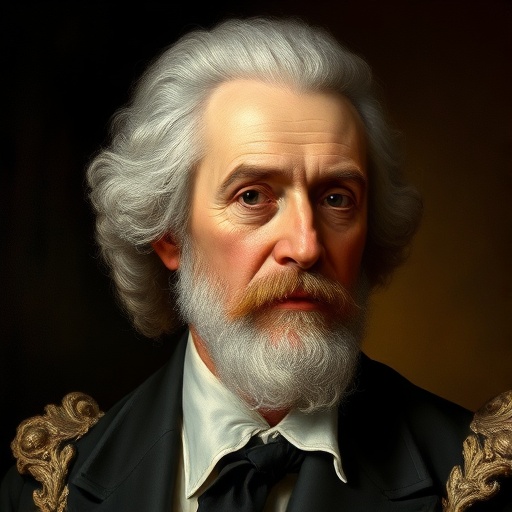
Antoine Lavoisier — "The desire to do good is the most powerful motive of all."
The desire to do good is the most powerful motive of all.
The desire to do good is the most powerful motive of all.
Click any product to generate a realistic preview. Up to 3 at a time.
* Initial load can take up to 90 seconds — revising the preview in another color is nearly instant.
"The greatest discoveries are not made by chance, but by observation and reflection."
"To invent is to choose."
"We may lay it down as an incontestible axiom, that, in all the operations of art and nature, nothing is created; an equal quantity of matter exists both before and after the experiment; the quality an…"
"The greatest pleasure of the human mind is to discover the truth."
"As ideas are preserved and communicated by means of words, it necessarily follows that we cannot improve the language of any science, without at the same time improving the science itself; neither can…"
Found in 1 providers: grok
1 source checked
When someone is genuinely motivated by wanting to help others or improve the world, that drive outperforms every self-serving impulse — greed, ambition, or fear. Altruistic intent doesn't tire or compromise because its goal isn't personal reward. People working to make things genuinely better sustain effort through setbacks longer than those chasing status or money. Wanting to do good, not just do well, is the deepest engine of meaningful achievement.
Lavoisier never patented his discoveries — he freely shared oxygen's role in combustion, his chemical nomenclature system, and the law of conservation of mass. Beyond the laboratory, he worked to improve Parisian street lighting, water quality, and gunpowder safety. He personally funded much research through tax-farming income, directing wealth toward public benefit. Executed in 1794, he reportedly petitioned his captors to allow him to finish experiments that would benefit humanity before he died.
Lavoisier worked during the Enlightenment, when European thinkers believed reason and science could systematically reform society for human welfare. France's royal academies framed knowledge explicitly as public service. Yet the same Revolutionary idealism that elevated civic virtue also produced the Terror — Lavoisier was guillotined partly for his tax-collection past despite his contributions. This tension between genuine beneficent motivation and brutal political reality made altruistic drive both a guiding principle and a tragic irony of his era.
AI-generated insights based on extensive research and information for context. Factual errors? Email [email protected].
Your cart is empty