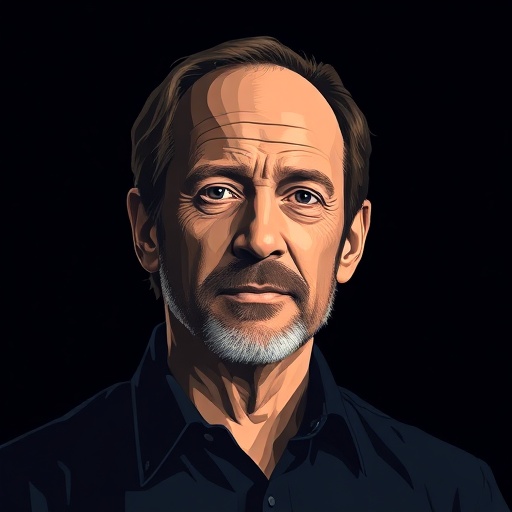
Tim Berners-Lee — "We need to fight for the right to privacy online. It's a fundamental human right…"
We need to fight for the right to privacy online. It's a fundamental human right.
We need to fight for the right to privacy online. It's a fundamental human right.
Click any product to generate a realistic preview. Up to 3 at a time.
* Initial load can take up to 90 seconds — revising the preview in another color is nearly instant.
"The web has become an engine of inequity and division."
"I’m worried about the future of the web, but I’m also optimistic."
"The web is a collaborative project, and we all have a role to play in its future."
"The web is a mirror of us. We have to make sure it reflects our best qualities."
"The Web does not just connect machines, it connects people."
British computer scientist who invented the World Wide Web at CERN in 1989 and founded the W3C, championing open web standards. Closely associated with Vint Cerf (TCP/IP co-creator and 'father of the internet') and Marc Andreessen (Mosaic browser creator and Netscape co-founder). For an intellectual contrast, see Mark Zuckerberg, Facebook (Meta) founder — Zuckerberg's walled-garden Facebook is the canonical contemporary opposite of Berners-Lee's open-web vision; Berners-Lee's Solid project and 'recapture the web' essays are explicitly written as a rebuttal to the platform-monopoly model Facebook pioneered.
Found in 1 providers: grok
1 source checked
Privacy online is not a privilege or a feature—it is a basic human right that must be actively defended. People deserve control over their personal information, communications, and digital identities. When that right is eroded by surveillance, data harvesting, or corporate overreach, individuals lose autonomy and freedom. Protecting it requires deliberate effort, legal frameworks, and public advocacy.
Berners-Lee invented the Web in 1989 as an open, decentralized system for sharing information freely. He has spent decades alarmed by how his creation was commercialized into surveillance infrastructure. Through his Contract for the Web and Solid project, he actively builds technology restoring user data ownership—making privacy advocacy central to his identity as both creator and conscience of the modern internet.
Berners-Lee made this case amid revelations like Edward Snowden's 2013 NSA disclosures, the Cambridge Analytica scandal, and GDPR's passage in 2018. Mass data collection by governments and tech giants became normalized. The web he designed as a tool for human empowerment had become a surveillance apparatus, making his call to fight for online privacy both urgent and personally charged.
AI-generated insights based on extensive research and information for context. Factual errors? Email [email protected].
Your cart is empty