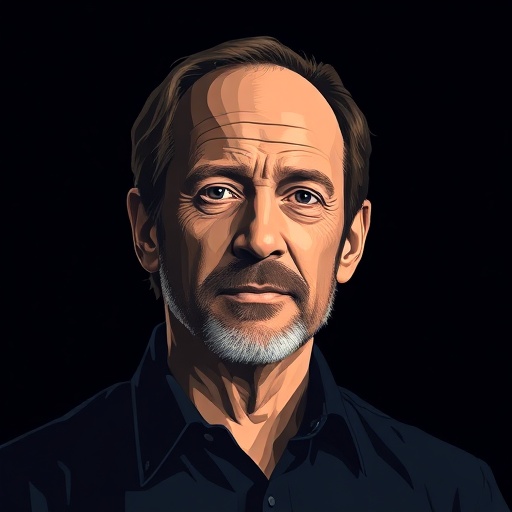
Tim Berners-Lee — "The web is a mirror of us. We have to make sure it reflects our best qualities."
The web is a mirror of us. We have to make sure it reflects our best qualities.
The web is a mirror of us. We have to make sure it reflects our best qualities.
Click any product to generate a realistic preview. Up to 3 at a time.
* Initial load can take up to 90 seconds — revising the preview in another color is nearly instant.
"The web is a global public good. We need to protect it."
"We need to teach people to be digitally literate, to understand how the web works."
"I didn’t expect the web to become so commercialized."
"The power of the Web is in its universality. Access by everyone regardless of disability is an essential aspect."
"The web should be a place where people can collaborate, not just consume."
British computer scientist who invented the World Wide Web at CERN in 1989 and founded the W3C, championing open web standards. Closely associated with Vint Cerf (TCP/IP co-creator and 'father of the internet') and Marc Andreessen (Mosaic browser creator and Netscape co-founder). For an intellectual contrast, see Mark Zuckerberg, Facebook (Meta) founder — Zuckerberg's walled-garden Facebook is the canonical contemporary opposite of Berners-Lee's open-web vision; Berners-Lee's Solid project and 'recapture the web' essays are explicitly written as a rebuttal to the platform-monopoly model Facebook pioneered.
Found in 1 providers: grok
1 source checked
The web is not a neutral technology but a reflection of the people who build and use it. Whatever values, biases, kindness, or cruelty humans bring online get amplified and mirrored back. Because the web shows who we are, the responsibility falls on us to be intentional about contributing our best behavior, ideas, and ethics, so the reflection we see is something worth keeping rather than something we regret.
Berners-Lee invented the World Wide Web in 1989 at CERN and gave it away royalty-free, choosing openness over personal wealth. Through the W3C and later the Contract for the Web and Solid project, he has consistently argued that the web's character depends on human stewardship. This quote captures his core belief: the technology itself is morally neutral, but its trajectory toward empowerment or harm is decided by the choices of users, developers, and policymakers.
Speaking in an era of social media manipulation, surveillance capitalism, algorithmic outrage, misinformation, and concentrated platform power, Berners-Lee watched his open invention drift toward something he warned was breaking. Cambridge Analytica, deepfakes, harassment, and monopolistic data hoarding shaped public debate. Governments pushed regulation while users questioned whether the web still served humanity. His statement landed inside this reckoning, urging people to reclaim agency rather than blame the medium for outcomes humans produced.
AI-generated insights based on extensive research and information for context. Factual errors? Email [email protected].
Your cart is empty