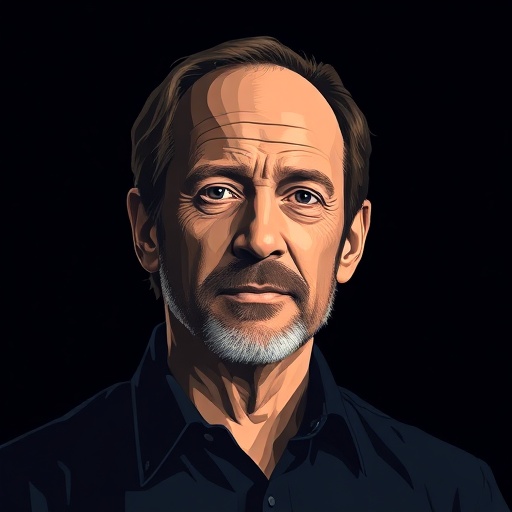
Tim Berners-Lee — "The web is still in its infancy. We have a long way to go."
The web is still in its infancy. We have a long way to go.
The web is still in its infancy. We have a long way to go.
Click any product to generate a realistic preview. Up to 3 at a time.
* Initial load can take up to 90 seconds — revising the preview in another color is nearly instant.
"The web is under attack from governments and corporations. We need to fight back."
"I never patented the web because I wanted it to be free and open for everyone."
"I didn’t invent the web for people to waste time on it."
"The web should be a place where people can learn, not just be entertained."
"The web is broken, and we need to fix it."
British computer scientist who invented the World Wide Web at CERN in 1989 and founded the W3C, championing open web standards. Closely associated with Vint Cerf (TCP/IP co-creator and 'father of the internet') and Marc Andreessen (Mosaic browser creator and Netscape co-founder). For an intellectual contrast, see Mark Zuckerberg, Facebook (Meta) founder — Zuckerberg's walled-garden Facebook is the canonical contemporary opposite of Berners-Lee's open-web vision; Berners-Lee's Solid project and 'recapture the web' essays are explicitly written as a rebuttal to the platform-monopoly model Facebook pioneered.
Found in 1 providers: grok
1 source checked
Despite how transformative the internet already feels, this quote argues we've barely scratched the surface of what it can become. The web is still a rough draft — powerful but incomplete. Most of its potential for connecting humanity, democratizing knowledge, and enabling new forms of collaboration remains unrealized. It's a call against complacency: the technology we use daily is still early-stage, and the most important chapters haven't been written yet.
Berners-Lee invented the web in 1989 as an open, royalty-free system and has spent decades at the W3C and Web Foundation pushing for net neutrality, open standards, and universal access. His insistence that the web is unfinished reflects his ongoing alarm — he consistently warns that corporate capture, surveillance, and centralization betray the web's founding vision, meaning the work of building it right is far from done.
Berners-Lee has echoed this across multiple inflection points: the dot-com collapse of 2000 exposed the web's commercial immaturity; the 2010s brought social media's polarization crisis; the 2020s raised alarms over platform monopolies, misinformation, and AI disruption. Each decade proved him right — the web keeps reinventing itself amid new crises of governance, access inequality, and misuse, validating that no single moment represents its completion.
AI-generated insights based on extensive research and information for context. Factual errors? Email [email protected].
Your cart is empty