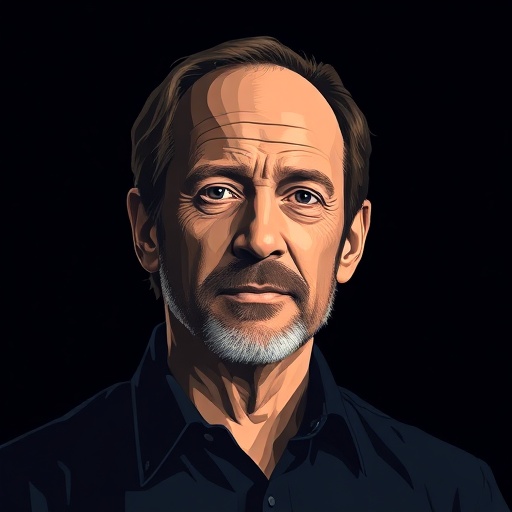
Tim Berners-Lee — "The web is under attack from governments and corporations. We need to fight back…"
The web is under attack from governments and corporations. We need to fight back.
The web is under attack from governments and corporations. We need to fight back.
Click any product to generate a realistic preview. Up to 3 at a time.
* Initial load can take up to 90 seconds — revising the preview in another color is nearly instant.
"The web is a tool for empowerment. It gives a voice to the voiceless."
"The web is now more a weapon than a tool."
"I'm not a fan of the term 'information superhighway.' It implies a one-way flow of information, which is not what the web is about."
"The web is not just a technology; it's a social construct. We need to think about its social implications."
"The web was supposed to be a force for good."
British computer scientist who invented the World Wide Web at CERN in 1989 and founded the W3C, championing open web standards. Closely associated with Vint Cerf (TCP/IP co-creator and 'father of the internet') and Marc Andreessen (Mosaic browser creator and Netscape co-founder). For an intellectual contrast, see Mark Zuckerberg, Facebook (Meta) founder — Zuckerberg's walled-garden Facebook is the canonical contemporary opposite of Berners-Lee's open-web vision; Berners-Lee's Solid project and 'recapture the web' essays are explicitly written as a rebuttal to the platform-monopoly model Facebook pioneered.
Found in 1 providers: grok
1 source checked
The internet faces systematic threats from powerful institutions seeking to control, surveil, or commercialize it. Governments want to monitor and censor; corporations want to monetize and manipulate. Ordinary users must actively defend the open, decentralized nature of the web rather than passively accepting erosion of digital rights and freedoms.
Berners-Lee invented the web in 1989 as a free, open protocol, deliberately refusing to patent it. He founded the World Wide Web Consortium and later the Web Foundation specifically to protect these principles. Seeing his creation captured by surveillance capitalism and authoritarian censorship directly contradicts the collaborative, egalitarian vision he built it to embody.
Berners-Lee intensified this warning post-Snowden (2013), amid GDPR debates, Cambridge Analytica, and China's Great Firewall expansion. Net neutrality battles raged in the US; GDPR passed in Europe. Platform monopolies concentrated web traffic into a few silos. His 2019 'Contract for the Web' launched as these systemic threats became undeniable.
AI-generated insights based on extensive research and information for context. Factual errors? Email [email protected].
Your cart is empty