What it means
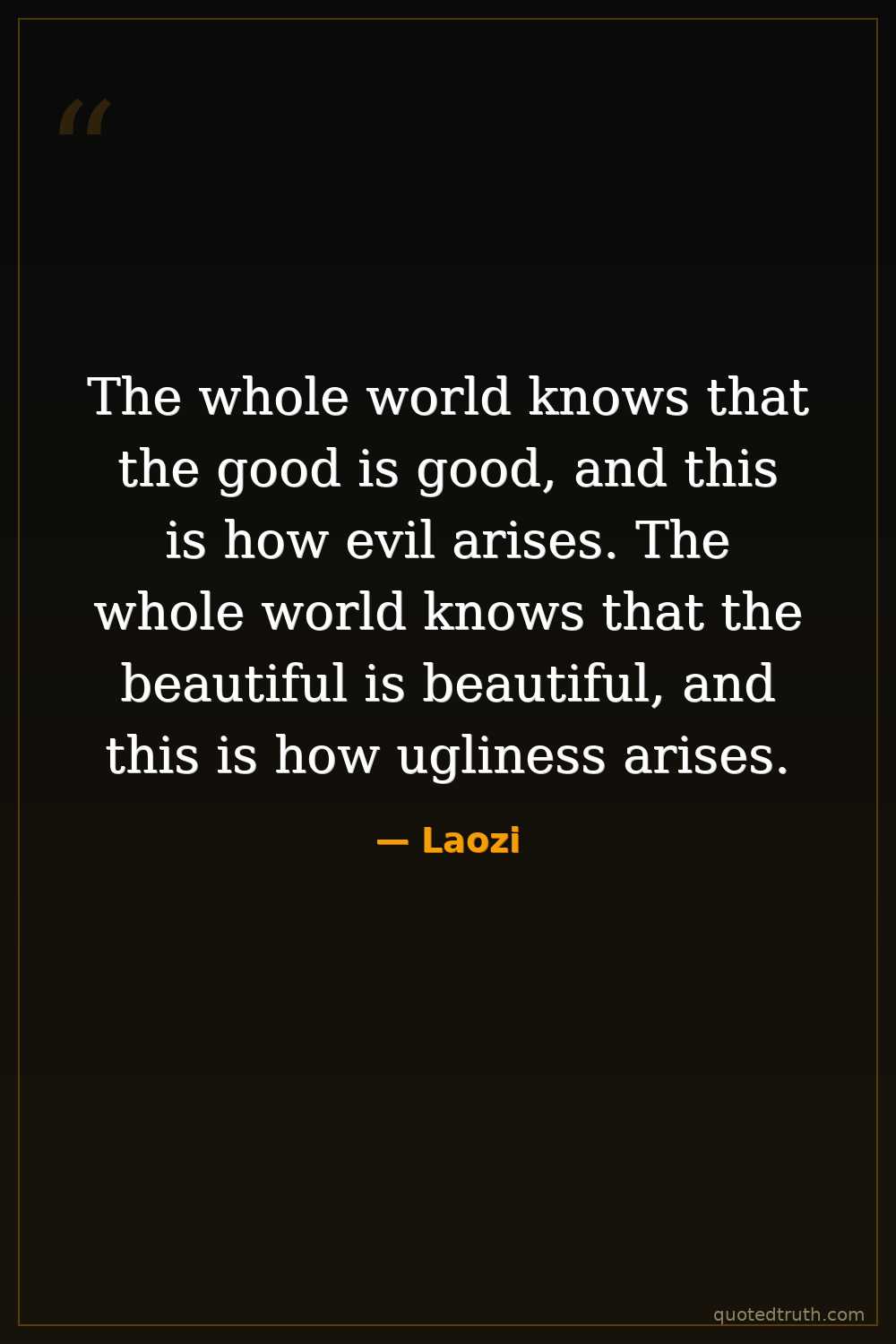
Labels create their opposites. The moment we define something as good, we automatically create the category of bad. Calling one thing beautiful makes everything else ugly by comparison. These qualities don't exist independently in the world; they emerge from our judgments and contrasts. By insisting on rigid distinctions, we generate the very problems we claim to oppose, since every positive label manufactures a negative shadow alongside it.
Relevance to Laozi
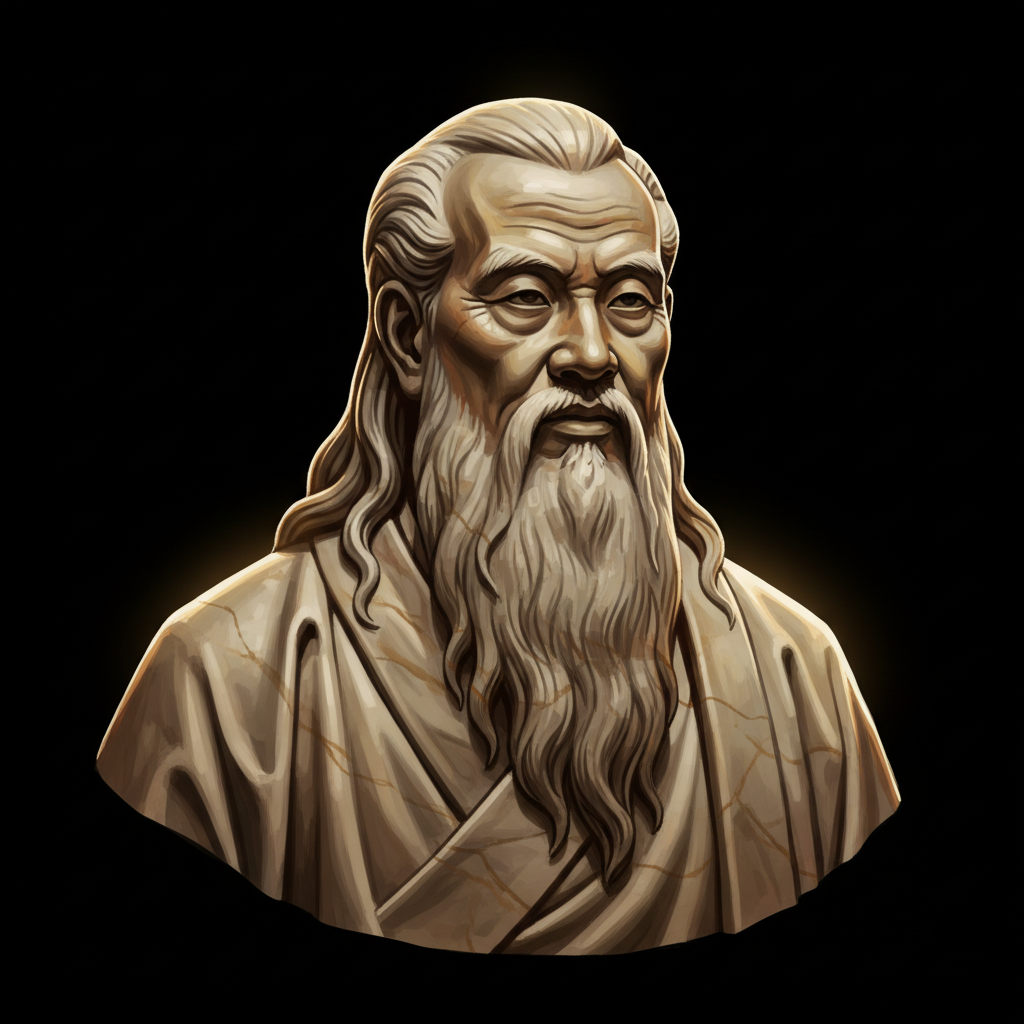
Laozi founded Taoism on exactly this kind of paradox, teaching that fixed categories distort reality and that the Tao transcends human labels. As a philosopher who reportedly served as a royal archivist before retreating from court politics, he witnessed how moral posturing bred corruption. His Tao Te Ching repeatedly warns that imposed virtues create hypocrisy, urging wu wei, effortless action, and acceptance of natural polarity instead of forced moral hierarchies.
The era
Laozi lived during the late Zhou dynasty's Spring and Autumn period, roughly the 6th century BCE, when warring states competed and Confucian scholars pushed rigid codes of ritual, hierarchy, and virtue as solutions to social collapse. Taoism emerged partly as a counter-movement, questioning whether imposing strict moral categories actually caused the chaos it claimed to fix. This saying directly challenged the era's assumption that defining and enforcing goodness would restore harmony to a fractured China.
AI-generated insights based on extensive research and information for context. Factual errors? Email [email protected].