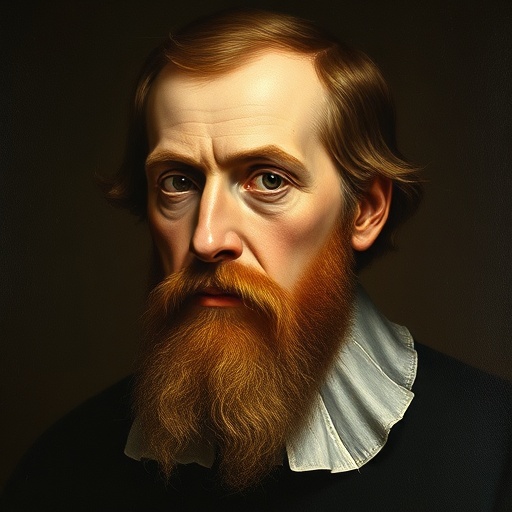
John Calvin — "The will of God is the cause of all things, and there is no other cause."
The will of God is the cause of all things, and there is no other cause.
The will of God is the cause of all things, and there is no other cause.
Click any product to generate a realistic preview. Up to 3 at a time.
* Initial load can take up to 90 seconds — revising the preview in another color is nearly instant.
"Without knowledge of God, there is no true knowledge of self."
"All are not created on equal terms, but some are preordained to eternal life, others to eternal damnation; and, accordingly, as each has been created for one or other of these ends, we say that he has…"
"Therefore, the bondage of the will to sin remains and yet such slavery is a voluntary and willful captivity."
"Servetus suffered the penalty due his heresies, but was it by my will. Certainly his arrogance destroyed him not less than his impiety."
"We call predestination God's eternal decree, by which he compacted with himself what he willed to become of each man. For all are not created in equal condition; rather, eternal life is foreordained f…"
French theologian whose Institutes of the Christian Religion (1536) systematized Protestant Reformed doctrine, including predestination. Closely associated with Martin Luther (Reformation founder, Calvin's predecessor). For an intellectual contrast, see Jacobus Arminius, Dutch Reformed theologian (1560-1609) — Arminius's rejection of strict double-predestination founded Arminianism — the theological tradition modern Methodism, most evangelicalism, and Pentecostalism descend from. The Calvinist-Arminian debate has divided Protestantism for 400 years.
Found in 1 providers: grok
1 source checked
Everything that exists or happens traces back to a single source: God's will. No event occurs by chance, no human decision operates outside divine sovereignty, no competing force shapes reality independently. God's intention is not one cause among many — it is the only cause. This is absolute determinism: the universe runs entirely on divine volition, leaving no room for luck, fate, or autonomous human agency.
Calvin was the architect of Reformed theology, centered on divine sovereignty and predestination. His Institutes of the Christian Religion systematically argued God predestines all things, including salvation and damnation. Governing Geneva as a theocratic city-state, Calvin believed civil and ecclesiastical law must reflect God's sovereign will. His relentless doctrinal precision and iron discipline stemmed from this core conviction: God's will alone structures reality, not human preference or church tradition.
Calvin wrote during the Protestant Reformation, when centuries of Catholic teaching on free will and human merit were being dismantled. The Church taught humans cooperate with grace in salvation; Calvin rejected this entirely. Erasmus and Luther had already clashed fiercely over free will in 1524–1525. Amid religious wars, political upheaval, and splintering reform movements, Calvin's assertion of absolute divine causation offered theological bedrock — certainty that God, not pope or prince, governed all outcomes.
AI-generated insights based on extensive research and information for context. Factual errors? Email [email protected].
Your cart is empty