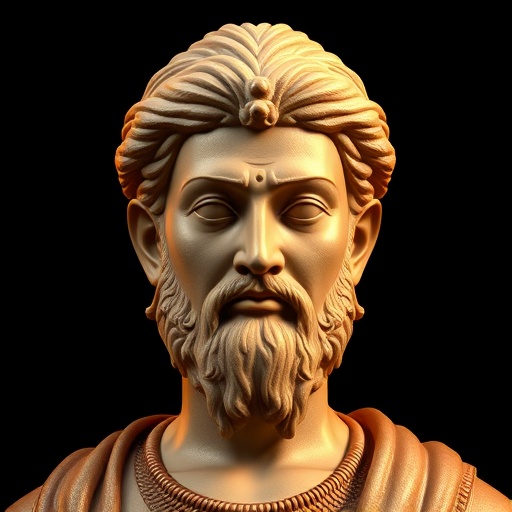
Mahavira — "The world is a prison, and the soul is the prisoner."
The world is a prison, and the soul is the prisoner.
The world is a prison, and the soul is the prisoner.
Click any product to generate a realistic preview. Up to 3 at a time.
* Initial load can take up to 90 seconds — revising the preview in another color is nearly instant.
"The path of purification is the path of non-violence, self-control, and penance."
"The greatest penance is to bear all hardships with equanimity."
"The light of knowledge dispels the darkness of ignorance."
"The soul is the only thing worth knowing."
"Conquer anger by forgiveness, pride by humility, deceit by straightforwardness, and greed by contentment."
24th and last Tirthankara of Jainism, whose teachings of strict ahimsa (non-violence), aparigraha (non-attachment), and karma reshaped ancient Indian religion. Closely associated with The Buddha (near-contemporary moral revolutionary, also reacting against Vedic ritualism). For an intellectual contrast, see Vedic Brahmanical ritual sacrifice, the animal-sacrifice-centered Vedic religion of his era — Mahavira's ahimsa demanded total non-violence, including not eating root vegetables that kill the plant — a maximum-distance ethical move from the Vedic priestly tradition that ritually sacrificed cattle and horses. The two cleanest poles of ancient Indian religious ethics.
Found in 1 providers: grok
1 source checked
The soul is bound and enslaved by the physical world—its pleasures, relationships, and desires act as chains. True freedom isn't political or social but spiritual: releasing the soul from material entanglement. Until we stop clinging to possessions, status, and sensory experience, we remain captive. Liberation comes only when the soul sheds all attachment and stands pure, untouched by worldly forces—an idea that resonates in any era dominated by consumption and distraction.
Mahavira abandoned royal privilege at 30, gave up clothing, possessions, and family to walk barefoot across India for twelve years in radical asceticism. He taught that karma—accumulated through every action, word, and thought—physically binds the soul, keeping it imprisoned in cycles of rebirth. His five vows, especially non-possession (aparigraha) and non-harm (ahimsa), were direct strategies for breaking those chains. This quote is essentially his life's thesis distilled into one sentence.
Mahavira lived during the 6th–5th century BCE Axial Age, when India's Shramana movement challenged Vedic Brahminical authority. The rigid caste system tied spiritual worth to ritual compliance, not personal liberation. Trade was expanding along the Gangetic plain, creating new material temptations. Buddhism was emerging simultaneously. Against this backdrop, declaring the world itself a prison was radical—rejecting not just corrupt institutions but the entire fabric of material existence as humanity's fundamental problem.
AI-generated insights based on extensive research and information for context. Factual errors? Email [email protected].
Your cart is empty