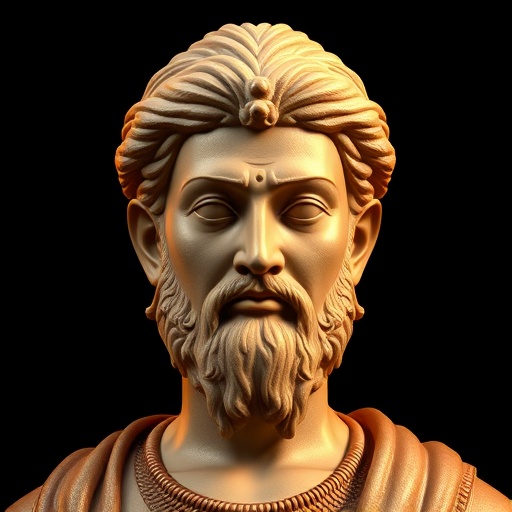
Mahavira — "The greatest penance is to bear all hardships with equanimity."
The greatest penance is to bear all hardships with equanimity.
The greatest penance is to bear all hardships with equanimity.
Click any product to generate a realistic preview. Up to 3 at a time.
* Initial load can take up to 90 seconds — revising the preview in another color is nearly instant.
"A man is born alone and dies alone; and he experiences the good and bad consequences of his karma alone; and he goes alone to hell or the supreme abode."
"One who is pure in thought, word, and deed is truly happy."
"The path to liberation is through right faith, right knowledge, and right conduct."
"Do not indulge in unnecessary talk."
"All living beings desire happiness and despise misery."
24th and last Tirthankara of Jainism, whose teachings of strict ahimsa (non-violence), aparigraha (non-attachment), and karma reshaped ancient Indian religion. Closely associated with The Buddha (near-contemporary moral revolutionary, also reacting against Vedic ritualism). For an intellectual contrast, see Vedic Brahmanical ritual sacrifice, the animal-sacrifice-centered Vedic religion of his era — Mahavira's ahimsa demanded total non-violence, including not eating root vegetables that kill the plant — a maximum-distance ethical move from the Vedic priestly tradition that ritually sacrificed cattle and horses. The two cleanest poles of ancient Indian religious ethics.
Found in 1 providers: grok
1 source checked
True spiritual discipline comes not from avoiding suffering but from facing it without losing inner balance. Equanimity — remaining steady through pain, loss, and difficulty — is itself the highest form of ascetic practice. It surpasses external rituals or self-mortification because it transforms the mind rather than just the body, producing genuine detachment from circumstances beyond one's control.
Mahavira renounced royalty at age thirty to live as a wandering ascetic for twelve years, enduring extreme cold, heat, hunger, and physical attacks without retaliation. His path to enlightenment demanded radical non-violence and emotional steadiness. This quote directly reflects his lived practice: he refused to harm even insects and absorbed all suffering as purification, modeling the equanimity he taught.
In 6th-century BCE India, spiritual authority was largely held by Brahmin priests performing elaborate Vedic rituals. Mahavira challenged this by insisting liberation came through personal discipline and ahimsa, not sacrifice. His era saw intense debate between Vedic orthodoxy, emerging Buddhism, and Jain asceticism about whether suffering should be fled or transformed — making equanimity under hardship a radical philosophical and social statement.
AI-generated insights based on extensive research and information for context. Factual errors? Email [email protected].
Your cart is empty