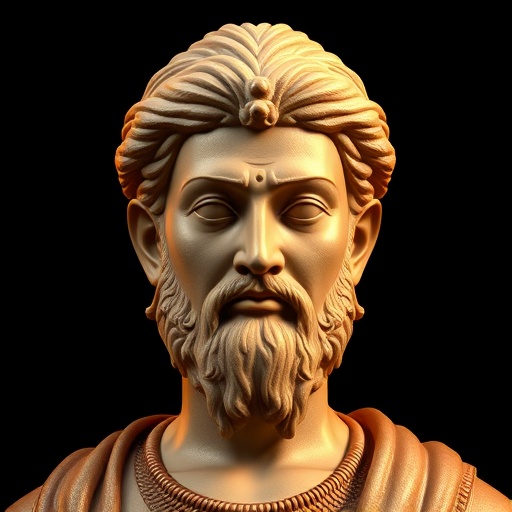
Mahavira — "The light of knowledge dispels the darkness of ignorance."
The light of knowledge dispels the darkness of ignorance.
The light of knowledge dispels the darkness of ignorance.
Click any product to generate a realistic preview. Up to 3 at a time.
* Initial load can take up to 90 seconds — revising the preview in another color is nearly instant.
"What is the use of a lamp when the sun has risen?"
"The highest spiritual state is to be free from all desires."
"One should not speak ill of others."
"The ignorant, who are attached to the world, suffer from misery and pain."
"He who knows one’s own soul knows the souls of all beings."
24th and last Tirthankara of Jainism, whose teachings of strict ahimsa (non-violence), aparigraha (non-attachment), and karma reshaped ancient Indian religion. Closely associated with The Buddha (near-contemporary moral revolutionary, also reacting against Vedic ritualism). For an intellectual contrast, see Vedic Brahmanical ritual sacrifice, the animal-sacrifice-centered Vedic religion of his era — Mahavira's ahimsa demanded total non-violence, including not eating root vegetables that kill the plant — a maximum-distance ethical move from the Vedic priestly tradition that ritually sacrificed cattle and horses. The two cleanest poles of ancient Indian religious ethics.
Found in 1 providers: grok
1 source checked
Knowledge eliminates ignorance — when you understand something deeply, fear, confusion, and harmful behavior rooted in not knowing fall away. Learning isn't merely intellectual; it's transformative and liberating. Gaining true understanding changes how you perceive yourself and others, replacing reflexive reactions built on misunderstanding with clarity and intentional action. Real knowledge isn't passive information but an active force that fundamentally reshapes how we live.
Mahavira spent 12 years in austere meditation before achieving kevala jnana — omniscient, perfect knowledge — which Jainism considers the highest attainable state. He then preached for 30 years, believing ignorance was the root of all bondage and suffering. Jainism's Three Jewels — right faith, right knowledge, right conduct — place knowledge as the essential path to liberation. His renunciation of royal comfort was itself an act of choosing truth over comfortable ignorance.
Mahavira lived in 6th-century BCE India when Vedic Brahmanism restricted sacred knowledge to the priestly Brahmin caste, transmitted through Sanskrit rituals inaccessible to most people. This was also the Axial Age — when Buddha, Confucius, and Socrates were contemporaneously challenging inherited authority across civilizations. Mahavira's assertion that knowledge could liberate anyone regardless of caste or birth directly challenged India's entrenched religious hierarchy, making spiritual attainment a matter of individual effort, not hereditary privilege.
AI-generated insights based on extensive research and information for context. Factual errors? Email [email protected].
Your cart is empty