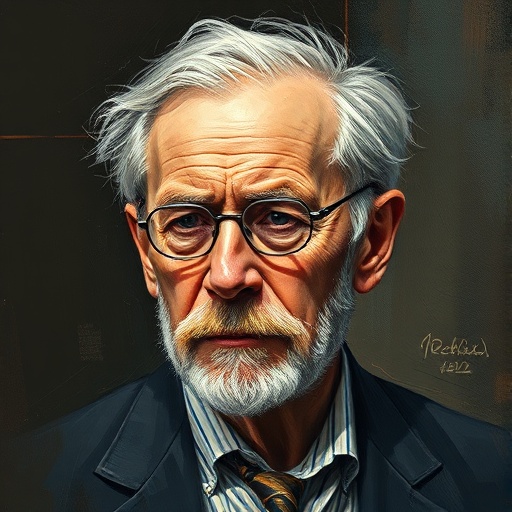
Erwin Schrodinger — "The world is a song, and we are the singers."
The world is a song, and we are the singers.
The world is a song, and we are the singers.
Click any product to generate a realistic preview. Up to 3 at a time.
* Initial load can take up to 90 seconds — revising the preview in another color is nearly instant.
"The more deeply we penetrate into nature, the more we find that it is full of mysteries."
"The existence of life on Earth is just a fluke. There is no special reason for it."
"But the truth is that we are not living in a world of objects, but in a world of events."
"We are living in an age of specialization. This is a dangerous trend."
"The world is not a machine. It is a living being."
Austrian physicist who shared the 1933 Nobel for the wave equation that bears his name and the famous cat thought-experiment. Closely associated with Werner Heisenberg (matrix-mechanics rival who reached the same physics by different math) and Albert Einstein (his pen-pal on quantum interpretation). For an intellectual contrast, see Niels Bohr, Danish physicist and architect of the Copenhagen interpretation — Schrödinger's cat thought-experiment was specifically designed to ridicule Bohr's 'observer-dependent reality' reading of quantum mechanics — Schrödinger thought the Copenhagen interpretation was absurd; the cat was meant as reductio ad absurdum.
Found in 1 providers: grok
1 source checked
Reality isn't a static, mechanical collection of objects—it's a dynamic, harmonic process unfolding like music. We aren't detached spectators standing outside the universe observing it; we are active participants whose presence shapes what emerges. The metaphor suggests existence has rhythm, pattern, and resonance, and that consciousness is not separate from physical reality but intrinsically woven into it, co-creating rather than merely witnessing.
Schrödinger's 1926 wave equation literally reimagined matter as wave phenomena—particles were probability waves, not billiard balls. He spent decades grappling with consciousness and quantum measurement, and was deeply shaped by Vedantic philosophy, writing in 'My View of the World' that individual minds are expressions of one universal consciousness. This quote's wave-music metaphor and participatory framing reflect both his foundational physics and his lifelong philosophical conviction.
The 1920s–1940s dismantled Newtonian determinism: quantum mechanics placed the observer at the center of measurement, sparking fierce debates about whether reality exists independently of consciousness. Two World Wars simultaneously shattered faith in cold, mechanistic worldviews. Schrödinger's holistic, participatory metaphor pushed back against reductionism at precisely the moment civilization was reckoning with what reality—and humanity's place within it—fundamentally meant.
AI-generated insights based on extensive research and information for context. Factual errors? Email [email protected].
Your cart is empty