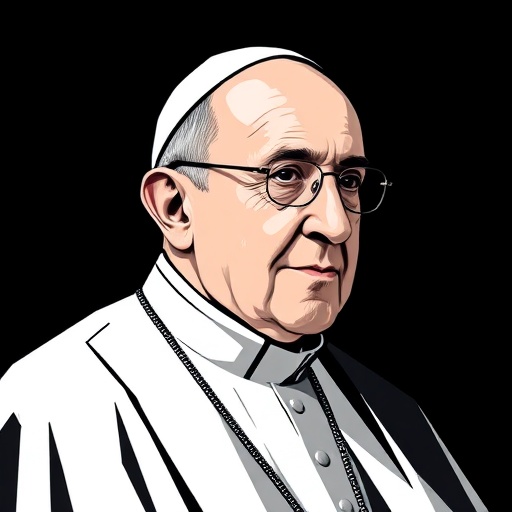
Pope Francis — "The world needs mercy, not condemnation."
The world needs mercy, not condemnation.
The world needs mercy, not condemnation.
Click any product to generate a realistic preview. Up to 3 at a time.
* Initial load can take up to 90 seconds — revising the preview in another color is nearly instant.
"A pastor who does not pray is a pastor who is in danger."
"The Lord is a good cook. He always prepares good food for us."
"I like to talk to people, to go out into the street. I like to be a street priest."
"The family is in crisis."
"The greatest revolution is the revolution of tenderness."
First Latin American and Jesuit pope (2013-), who has steered the Catholic Church toward pastoral inclusion on LGBTQ pastoral care, divorced Catholics, and climate. Closely associated with Pope John XXIII (the Vatican II reformer pope) and Cardinal Walter Kasper (his theological ally on pastoral reform). For an intellectual contrast, see Cardinal Raymond Burke, American traditionalist cardinal, former head of the Vatican Apostolic Signatura — Burke is the public face of Catholic traditionalism that views Francis's pastoral approach as doctrinally dangerous — he has formally challenged Amoris Laetitia and other Francis reforms.
Found in 1 providers: grok
1 source checked
The quote calls for compassion over judgment in human relationships and institutions. Rather than punishing or shaming those who err, it urges extending understanding and forgiveness. It challenges both religious and secular systems to prioritize empathy and rehabilitation. The quote rejects a punitive mindset, advocating for a culture where people are met with grace rather than harsh judgment or exclusion — especially toward the marginalized, the struggling, and the morally complex.
Pope Francis, born Jorge Mario Bergoglio in Buenos Aires, took the name of the humble Saint Francis upon his 2013 election. Shaped by Jesuit formation emphasizing discernment and accompaniment, he has consistently prioritized pastoral care over doctrinal enforcement — washing prisoners' feet, visiting refugees, and calling the Church a 'field hospital for the wounded.' Mercy is not rhetoric for him; it is the operational center of his entire pontificate and personal theology.
Francis became Pope in 2013 amid mass migration crises, rising nationalism, and fierce culture wars over sexuality, race, and religion. His tenure coincided with Europe's refugee emergency, hardline immigration crackdowns globally, and the Catholic Church's own abuse scandals and internal condemnation battles over divorce and homosexuality. Against a backdrop of institutional harshness and social polarization, his mercy-first framing was both a theological declaration and a pointed rebuke of exclusionary rhetoric dominating global discourse.
AI-generated insights based on extensive research and information for context. Factual errors? Email [email protected].
Your cart is empty