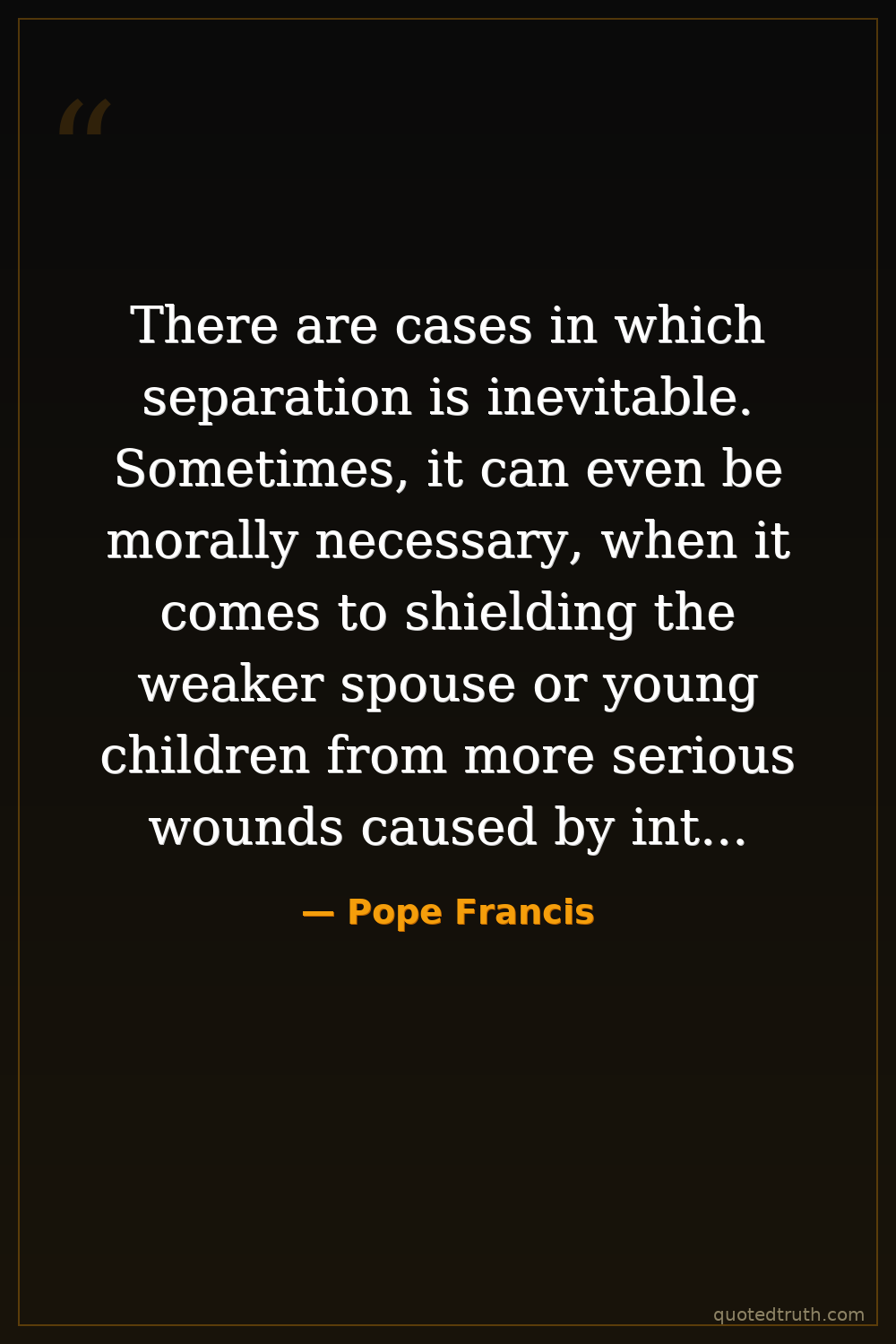
What it means
Marriage is meant to last, but when one partner subjects the other—or the children—to violence, abuse, humiliation, exploitation, chronic neglect, or betrayal, staying together can cause deeper wounds than separating. In those circumstances, parting is not moral failure but protective necessity. Guarding the dignity and safety of the vulnerable takes precedence over preserving the institutional form of the union, even within a faith tradition that holds marriage sacred.
Relevance to Pope Francis
Francis's 2016 apostolic exhortation Amoris Laetitia opened pastoral doors for divorced Catholics long shut by rigid doctrine. A Jesuit trained in discernment over rules, he consistently prioritized mercy and real-world complexity over institutional formalism. As Archbishop of Buenos Aires he encountered poverty and domestic abuse firsthand. His reformist papacy challenged the Church to accompany broken families rather than condemn them, directly reflecting his conviction that pastoral compassion must respond to lived human suffering, not just canon law.
The era
Francis made these remarks amid the Church's heated Synods on the Family (2014–2015), releasing Amoris Laetitia in 2016 and sparking fierce internal debate about communion for the divorced and remarried. Globally, rising domestic-violence awareness and the emerging #MeToo reckoning made protecting abuse survivors a cultural priority. Simultaneously, the Catholic Church was confronting its own clergy abuse scandals, lending urgent moral weight to any teaching that positioned shielding the vulnerable as a Christian obligation rather than a doctrinal exception.
AI-generated insights based on extensive research and information for context. Factual errors? Email [email protected].