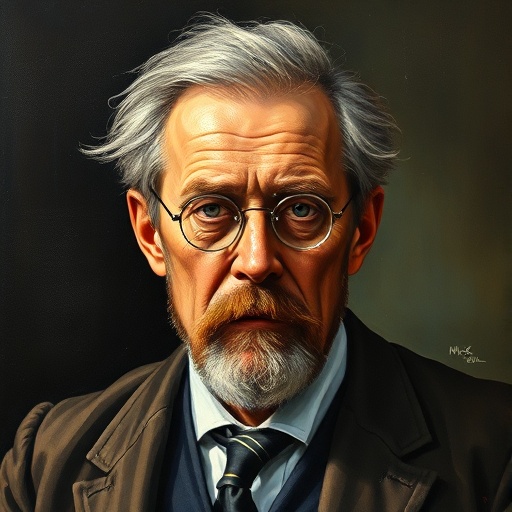
Max Planck — "There can be no such thing as a religion without a God."
There can be no such thing as a religion without a God.
There can be no such thing as a religion without a God.
Click any product to generate a realistic preview. Up to 3 at a time.
* Initial load can take up to 90 seconds — revising the preview in another color is nearly instant.
"Experiment is the only means of knowledge at our disposal. Everything else is poetry, imagination."
"All great discoveries are made by men whose feelings run ahead of their thinking."
"All matter originates and exists only by virtue of a force… We must assume behind this force the existence of a conscious and intelligent Mind. This Mind is the matrix of all matter."
"The world is full of wonders, and science is the key to unlocking them."
"The old pioneers of science, such as Galileo, Kepler, Newton, were deeply religious men."
Found in 1 providers: grok
1 source checked
A religion, by definition, requires belief in some form of divine or higher power. Without a God or deity at its center, a belief system becomes philosophy, ethics, or ideology rather than religion. The statement draws a firm line: removing the divine element strips away what makes something genuinely religious. Faith systems need something transcendent to worship, pray to, or orient life around, otherwise they lose their essential character.
Planck, despite pioneering quantum theory and reshaping physics, was a devout Lutheran who served as a church elder in Berlin. He saw no conflict between rigorous science and faith, often arguing both pursued truth through different paths. This quote reflects his lifelong conviction that genuine religion required a personal God, distinguishing authentic faith from the vague spiritualism popular among intellectuals of his day.
Planck lived through an era of intense scientific upheaval and spiritual questioning (1858-1947). Darwinism, Nietzsche's 'God is dead,' Freudian psychology, and two world wars shook traditional belief. Many intellectuals embraced atheism, materialism, or abstract spiritualism. Planck publicly defended theism amid this turbulence, lecturing on 'Religion and Natural Science' in 1937 under Nazi rule, insisting authentic religion demanded a genuine deity rather than diluted substitutes.
AI-generated insights based on extensive research and information for context. Factual errors? Email [email protected].
Your cart is empty