What it means
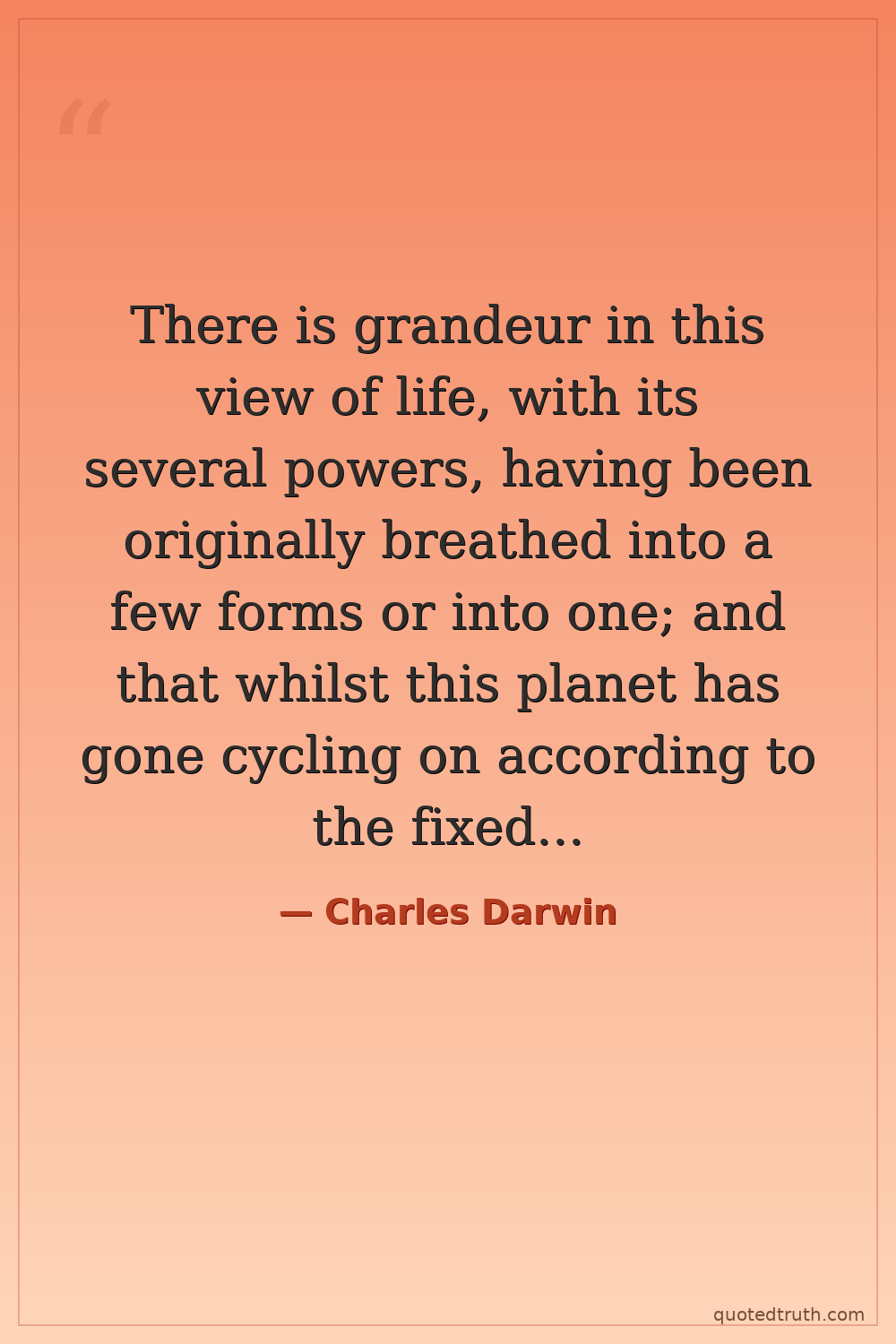
Life's complexity and beauty emerged from simple origins through natural processes, not divine design. A single or few original life forms, subject to natural laws, gave rise to the staggering diversity of organisms we see today. The universe operates by fixed rules, yet within those rules, something magnificent and endlessly varied has emerged — and continues emerging — without requiring a supernatural architect.
Relevance to Charles Darwin
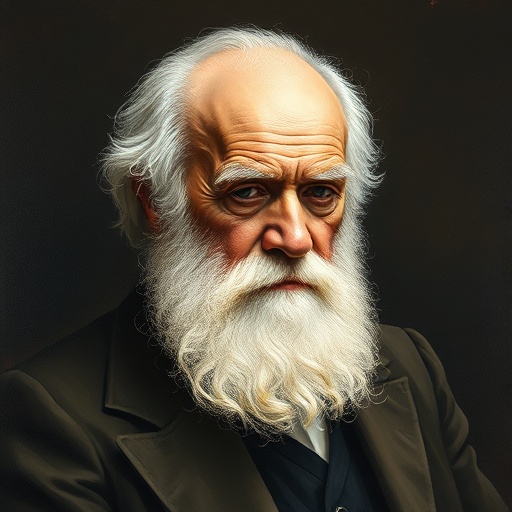
Darwin closed 'On the Origin of Species' with this sentence, knowing it would upend Victorian society's worldview. Having spent 20 years refining his theory after the Beagle voyage, he chose awe over provocation. His own deep reverence for nature — shaped by years cataloguing beetles, barnacles, and finches — made him frame evolution not as cold mechanism but as profound wonder. The word 'grandeur' was deliberate, a bridge to readers who feared godlessness.
The era
Published in 1859, this quote landed in a Britain still anchored by natural theology — the belief that nature's complexity proved God's handiwork. Industrialization was reshaping society; science was challenging scripture on geology and age of Earth. Darwin's closing flourish acknowledged that grandeur need not require Genesis. It spoke to readers wrestling with faith and empiricism, offering evolution as inspiring rather than diminishing — a rhetorical choice as calculated as any scientific argument.
AI-generated insights based on extensive research and information for context. Factual errors? Email [email protected].