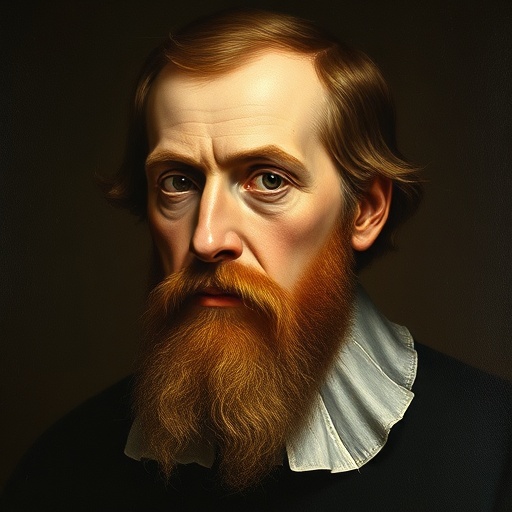
John Calvin — "There is no worse screen to block out the Spirit than an overactive mind."
There is no worse screen to block out the Spirit than an overactive mind.
There is no worse screen to block out the Spirit than an overactive mind.
Click any product to generate a realistic preview. Up to 3 at a time.
* Initial load can take up to 90 seconds — revising the preview in another color is nearly instant.
"God's justice or righteousness is manifest as the reprobate receive the eternal punishment they deserve."
"Ignorance of predestination is a great evil, because it deprives us of the knowledge of God's glory."
"The church is the mother of all the godly."
"The will of God is the cause of all things, and there is no other cause."
"I consider looseness with words no less of a defect than looseness of the bowels."
French theologian whose Institutes of the Christian Religion (1536) systematized Protestant Reformed doctrine, including predestination. Closely associated with Martin Luther (Reformation founder, Calvin's predecessor). For an intellectual contrast, see Jacobus Arminius, Dutch Reformed theologian (1560-1609) — Arminius's rejection of strict double-predestination founded Arminianism — the theological tradition modern Methodism, most evangelicalism, and Pentecostalism descend from. The Calvinist-Arminian debate has divided Protestantism for 400 years.
Found in 1 providers: grok
1 source checked
A restless, constantly churning intellect becomes a wall between a person and spiritual experience. When the mind races — analyzing, planning, doubting — it crowds out quiet receptivity. Genuine spiritual connection requires inner stillness. Calvin's point is practical: busyness of thought, not just moral failure, is one of the most effective barriers humans erect against divine influence.
Calvin built Reformed theology on the Holy Spirit's role in salvation — his doctrine of the Spirit's internal testimony held that the Spirit alone convinces believers Scripture is true. Though prodigiously intellectual, systematizing Protestant doctrine in his Institutes, Calvin consistently warned that unaided human reason was corrupted and insufficient. He saw intellectual pride as humanity's deepest obstacle to receiving divine grace.
The 16th-century Reformation erupted partly against Catholic scholasticism's intricate theological systems, which many felt reduced faith to abstract argument. Simultaneously, Renaissance humanism celebrated human reason as the measure of all things. Calvin wrote amid these competing forces in Geneva, where doctrinal debate was constant. His warning against mental overactivity pushed back against both, asserting spiritual truth required humble receptivity, not brilliant analysis.
AI-generated insights based on extensive research and information for context. Factual errors? Email [email protected].
Your cart is empty