Laozi — "Therefore the sage manages affairs without doing anything, and conveys his instr…"
Therefore the sage manages affairs without doing anything, and conveys his instructions without the use of speech.
Therefore the sage manages affairs without doing anything, and conveys his instructions without the use of speech.
Click any product to generate a realistic preview. Up to 3 at a time.
* Initial load can take up to 90 seconds — revising the preview in another color is nearly instant.
"Doing nothing is better than being busy doing nothing."
"Recompense injury with kindness."
"The more you prohibit, the more evil there will be."
"The more you know, the less you understand."
"If you realize that all things change, there is nothing you will try to hold on to."
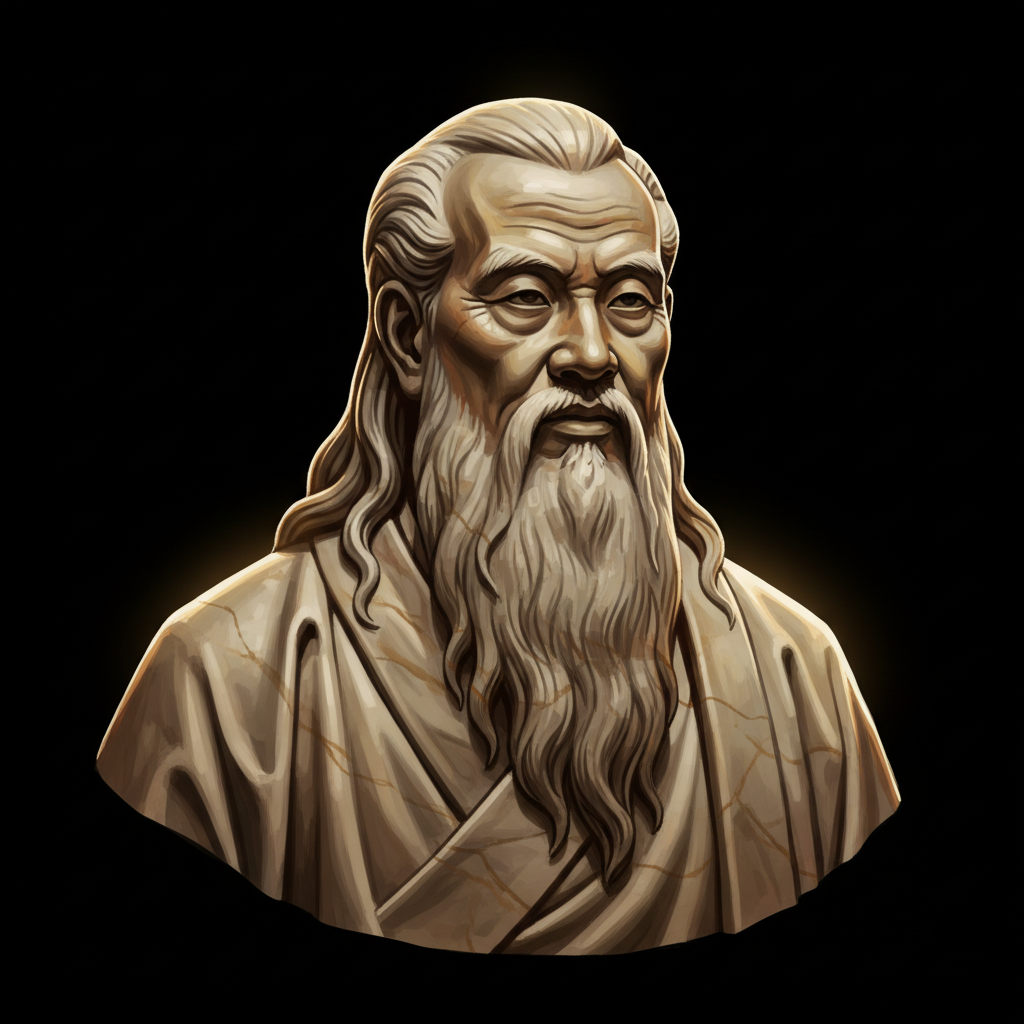
Reputed founder of Taoism and author of the Tao Te Ching, whose wu wei (effortless action) shaped East Asian philosophy. Closely associated with Zhuangzi (later Taoist who extended Laozi's framework). For an intellectual contrast, see Confucius, near-contemporary Chinese sage of social ritual and duty — Confucius systematized social order through ritual and hierarchy; Laozi argued that all such systems were the disease, not the cure — the two founding poles of Chinese moral philosophy.
Found in 1 providers: gemini
1 source checked
A wise leader achieves results by stepping back rather than pushing forward. Instead of forcing outcomes through constant action or barking orders, they shape events by example, timing, and restraint. People learn by watching how the sage lives, not from lectures. The idea is that effortless action aligned with how things naturally unfold accomplishes more than strained effort, and silent modeling teaches more durably than verbal commands ever could.
Laozi is the legendary founder of Taoism and reputed author of the Tao Te Ching, which centers on wu wei, effortless non-forcing action. Tradition casts him as a reclusive archivist in the Zhou royal court who eventually withdrew from public life, preferring quiet observation to political maneuvering. This saying embodies his personal choice: he taught by withdrawing rather than preaching, leaving behind a short text instead of a movement.
Laozi is placed in the sixth century BCE during the late Zhou dynasty, an age of fracturing feudal states drifting toward the Warring States period. Rulers relied on harsh decrees, elaborate ritual, and constant military campaigning. Rival schools like Confucianism prescribed strict codes of conduct and active governance. Against that noisy backdrop of forced order, a philosophy praising silence, restraint, and non-interference stood out as a radical critique of meddling authority.
AI-generated insights based on extensive research and information for context. Factual errors? Email [email protected].
Your cart is empty